
Practical Information
Frequently Asked Questions
about Madagascar
Everything you need to know before, during, and after your trip, answered with complete honesty.
Madagascar is a country that requires a little preparation, not because it is difficult, but because it does not follow the usual patterns of travel. These are the answers we give our travelers every day.
Before departure
Yes. Swiss and European citizens can obtain their visa upon arrival at Ivato Airport (Antananarivo), online at evisamadagascar.com, or through the Embassy of Madagascar in Geneva. The visa is valid from 1 to 90 days depending on the fee. Your passport must be valid for at least 6 months after your return date.
Yes, without hesitation. We recommend insurance that covers at least medical expenses and emergency evacuation. Hospital infrastructure in Madagascar is limited outside Antananarivo, and in the event of a serious issue, evacuation may be necessary.
Also make sure that your insurance covers outdoor activities if you are planning hikes or expeditions.
Madagascar can be visited all year round, but conditions vary. June to September: brings the dry season, with clear weather and ideal conditions for the Highlands and most parks. October–November: see rising heat and landscapes coming alive, with fewer visitors. December to March: is the rainy season, marked by lush vegetation, though some roads can become difficult to navigate while the east coast carries a risk of cyclones.
It is not so much a question of a good or bad season, but rather of which regions are better suited depending on the month. Tell us when you are planning to travel and we will guide you.
The essentials: layered clothing (temperatures vary greatly between day and night in the Highlands), sturdy walking shoes, mosquito repellent (Antibrumm Forte preferably), high-protection sunscreen, a headlamp, and a small basic medical kit. A warm fleece jacket is essential from April to September.
For the coast, add stronger sun protection and light clothing. Avoid hard-shell wheeled suitcases, as a backpack or soft bag is much more practical on Malagasy roads.
Favor clothing that is easy to wash and dries quickly, since laundry facilities are limited once you leave the main hotels. If you take regular medication, bring a sufficient supply for the entire trip along with the corresponding doctor's prescription, as not every medicine is easy to find locally. We also recommend carrying a copy of your important documents (passport, visa, insurance policy) separately from the originals, in either paper or digital form.
Health & safety
A few simple precautions are enough in the great majority of cases: do not drink tap water, wash your hands regularly, and avoid raw vegetables and unpeeled fruits in small street restaurants. From sunset onwards, protect yourself from mosquitoes with long sleeves, repellent, and a mosquito net.
As for the rest, eat where the locals eat: street food is generally fresh and prepared on the spot.
No. Tap water is not safe for travelers. Drink sealed bottled water or filtered water. Mid-range and premium hotels generally provide purified water. Also avoid ice in places you are not sure about.
We are not medical professionals, so we will leave the advice to your doctor. What we can tell you is that not all regions carry the same risk, and exposure varies throughout the year. Some travelers opt for prophylaxis, others trust in repellent and protective clothing. Either way, doctors and antimalarial medications are readily available locally.
Madagascar is remarkably safe in this regard. There are no large predators, no particularly aggressive snakes, and no crocodiles except in certain lakes and rivers in the north and west (where you will be warned). Mosquitoes remain the main risk.
At sea, follow the usual safety instructions. In forests, a few species of spiders and scorpions exist, but incidents are rare. Overall, Malagasy wildlife is curious rather than threatening.
Yes, entirely possible, provided you take a few sensible precautions. Solo travel is common and widely accepted in Madagascar, including for women. Our driver-guides are a genuine advantage in this regard: they accompany you, handle the unexpected, and help you avoid many uncomfortable situations.
We advise against traveling at night outside urban areas and against long-distance Taxi-Brousse (Bush Taxis). Aside from that, Madagascar is a welcoming country.
Never travel at night outside cities: it is the golden rule on Malagasy roads.
Field advice from PRIORIMoney & payments
The official currency is the Ariary (MGA). To convert quickly, take the amount in Ariary, remove three zeros, then divide by 5. This gives you the approximate equivalent in Swiss francs.
For a live exchange rate, you can use this currency converter.
Note: people often still count in Malagasy Francs (FMG), the former currency (5 FMG = 1 Ariary). Always ask which currency the price is being quoted in.
For reference, a litre bottle of mineral water costs approximately 2,000 Ariary, or 10,000 FMG, or CHF 0.40
Only to a limited extent. Visa cards are accepted in some hotels in Antananarivo and a few major restaurants, but this is the exception. Outside the capital, cash is king. ATMs exist in Tana and in major towns, but they often break down or run out of cash.
Plan to have enough cash for any trip outside major towns, and keep a reserve in euros or dollars as backup.
Transport & getting around
Car with driver: the most comfortable and safest solution, and this is what we recommend and arrange.
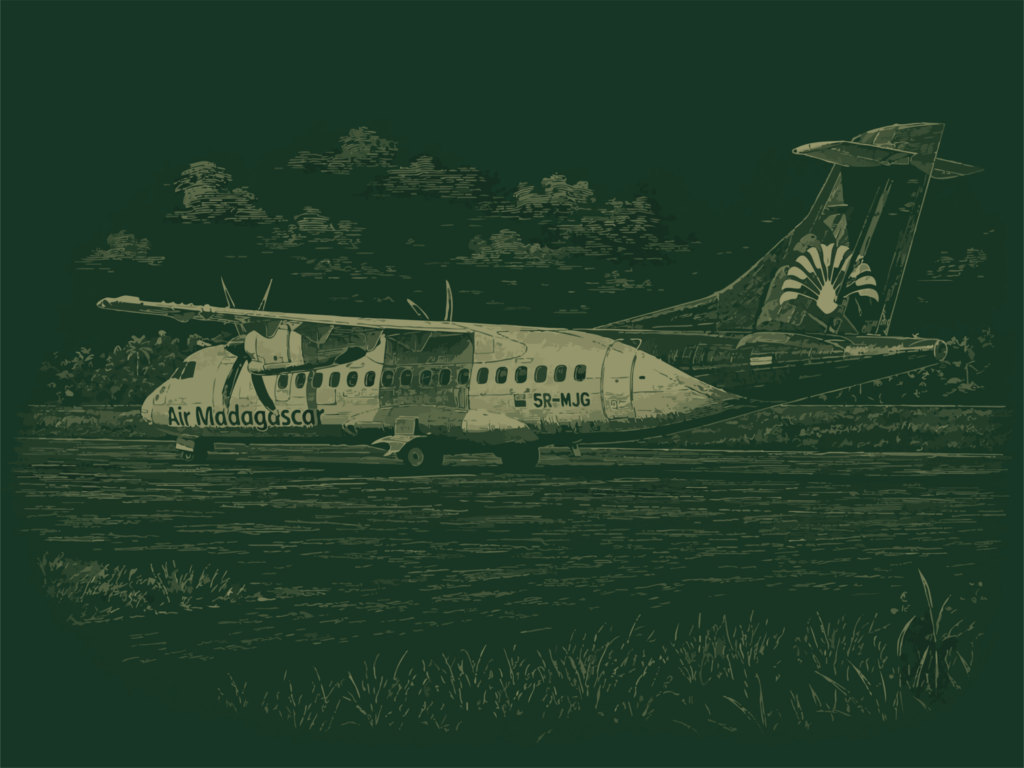
Domestic flights: Madagascar Airlines and a few regional airlines serve the main cities (Nosy Be, Tuléar, Fort-Dauphin…), which is useful for saving time over long distances.
Taxi-Be or Taxi-Brousse (Bush Taxi): local shared transport that is inexpensive but slow, uncomfortable, and with a higher accident risk, so it is best avoided for long distances. In town, standard taxis are plentiful and cheap, but you should negotiate the price before getting in.
Honestly: no, not always. National roads are partly paved but full of potholes. Some tracks become hard to cross during the rainy season. Journeys often take two to three times longer than a map would suggest.
This is a reality of the country that must be factored in from the planning stage, which is also why we design itineraries with margins.
PRIORI strongly advises against it. Winding and damaged roads, herds on the roadway, insufficient signage, outdated maps, no roadside assistance in many regions, frequent road checks with a risk of corruption. In case of an accident, the situation can become very difficult to handle alone.
Our drivers know the country, speak French and English, and do far more than drive, as they are your guides and interpreters.
For more detailed information on traveling by car in Madagascar, you can read our guide to car travel in Madagascar.
On site
The two official languages are Malagasy and French. French is widely spoken in cities, hotels, restaurants, and by most people who deal with travelers. In rural areas, Malagasy dominates. English is understood in the tourism sector, but unevenly.
A few words of Malagasy (Misaotra for thank you, Salama for hello and Veloma for Goodbye) are always appreciated.
Generally yes, with a few precautions. Malagasy cuisine is simple, fresh, and flavorful: rice, vegetables, fish, and zebu. Choose hot dishes and avoid raw foods in places you are not sure about. Hotel restaurants and addresses recommended by PRIORI are reliable.
Avoid eating street food if you have a sensitive stomach during the first few days and give yourself time to adapt.
Internet exists, but do not count on it everywhere. In Antananarivo and in major towns, Wi-Fi is available in most hotels and restaurants. Outside towns, coverage becomes patchy or non-existent.
For mobile data, local operators Yas (telma) and Orange Madagascar offer the best national coverage, and a local SIM can easily be bought at the airport or in town for a few euros. Airtel is a third option, though with more limited coverage. Be prepared to go without an internet connection at certain stages, but this can also be a good opportunity to truly disconnect.
Power cuts: Power outages are frequent in Madagascar, including in Antananarivo, sometimes lasting several hours a day depending on the area. Good hotels have a generator, but not all of them. Bring a power bank for your devices.
Outlets: Madagascar uses type C and E outlets (round two-pin European standard plugs), so French and Swiss plugs with an adapter work directly. Voltage is 220V.
Pickpockets: stay alert in markets and crowded areas of Antananarivo. Avoid displaying your phone, camera, or jewelry. Outside major cities, incidents are rare.
Traveling with PRIORI
Both. Whether you are traveling alone, as a couple, or with family, we can build a trip entirely around you. We also run small guided group tours. Either way, every journey is conceived and organized in Antananarivo by our team, with no middleman.
A good travel program is built through dialogue. We want to understand your wishes, your schedule, and the rhythm you are looking for before we propose anything. From there, we answer your questions, explore accommodation options together, and adjust until every detail fits. Write to us or give us a call: that is the best way to begin.
Contact us by email or phone: that is the best place to start.