Malagasy Crafts – House of Madagascar · PRIORI
Crafts & Culture Guide

Malagasy Crafts —
Art, Tradition & Makers

From the aluminium workshops of Ambatolampy to the sculptors of the Zafimaniry forest — four encounters with the living crafts of Madagascar.

Crafts · Madagascar

Aluminium casting —
sculpting the everyday

An endemic practice from Ambatolampy, 70 kilometres south of Antananarivo — recycled aluminium finds its second life in objects that range from the kitchen pot to finely decorated artistic pieces.


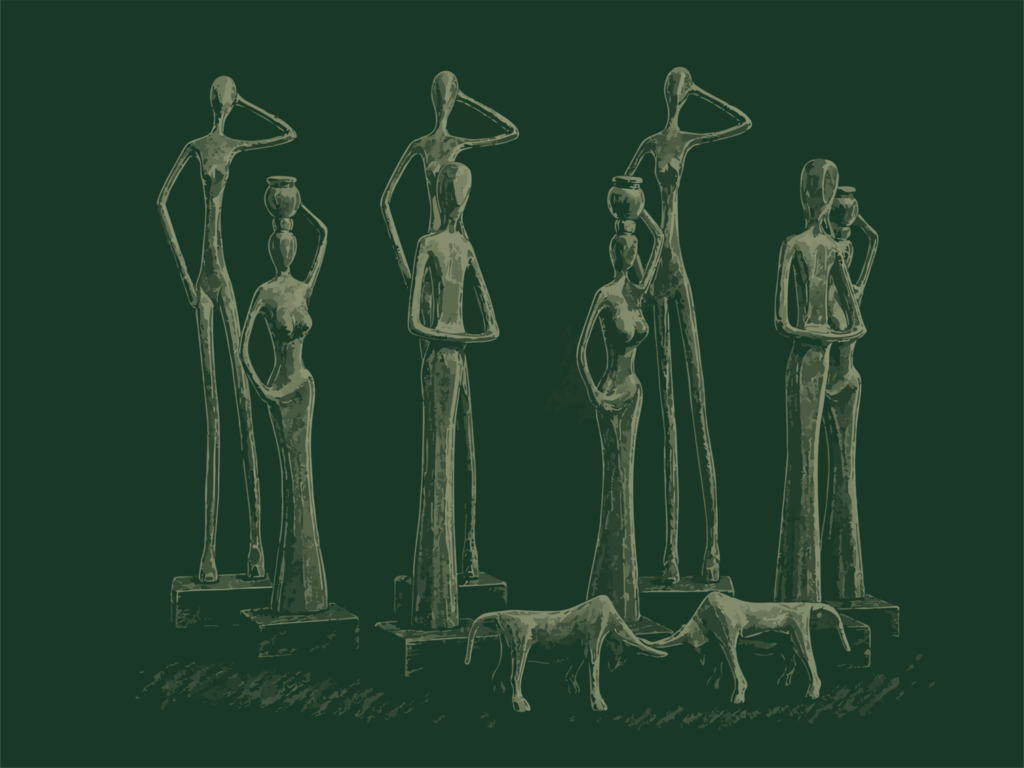
Aluminium casting is one of those crafts you notice the moment you step into Malagasy daily life. Whether in roadside workshops, bustling market stalls or artisan cooperatives, the same fundamental gesture repeats itself: metal recovered from worn car bodies, drink cans, window frames — even debris from old aircraft — is melted down and reborn in an entirely new form.

Aluminium is not produced in Madagascar, but it has been recycled there for generations. Once melted at 660 degrees, this lightweight metal is poured into sand moulds shaped by hand, forming everything from everyday cookware to ornate decorative pieces. The result is a craft that is simultaneously industrial and intimate — each cast object bearing the marks of its maker.
The Casting Process
1
Shape the modelA master form is sculpted from clay or wood, defining the final object's profile.
2
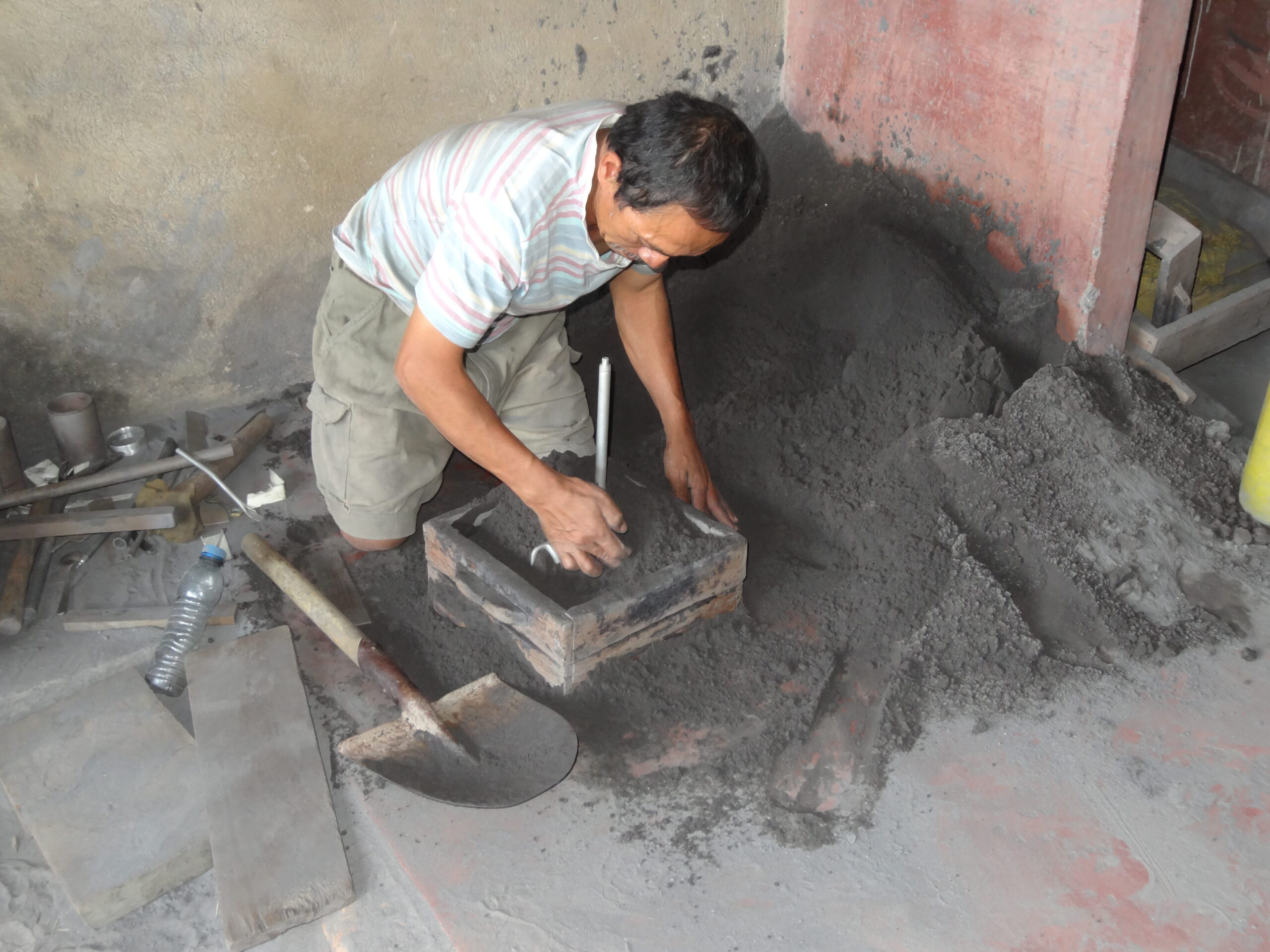
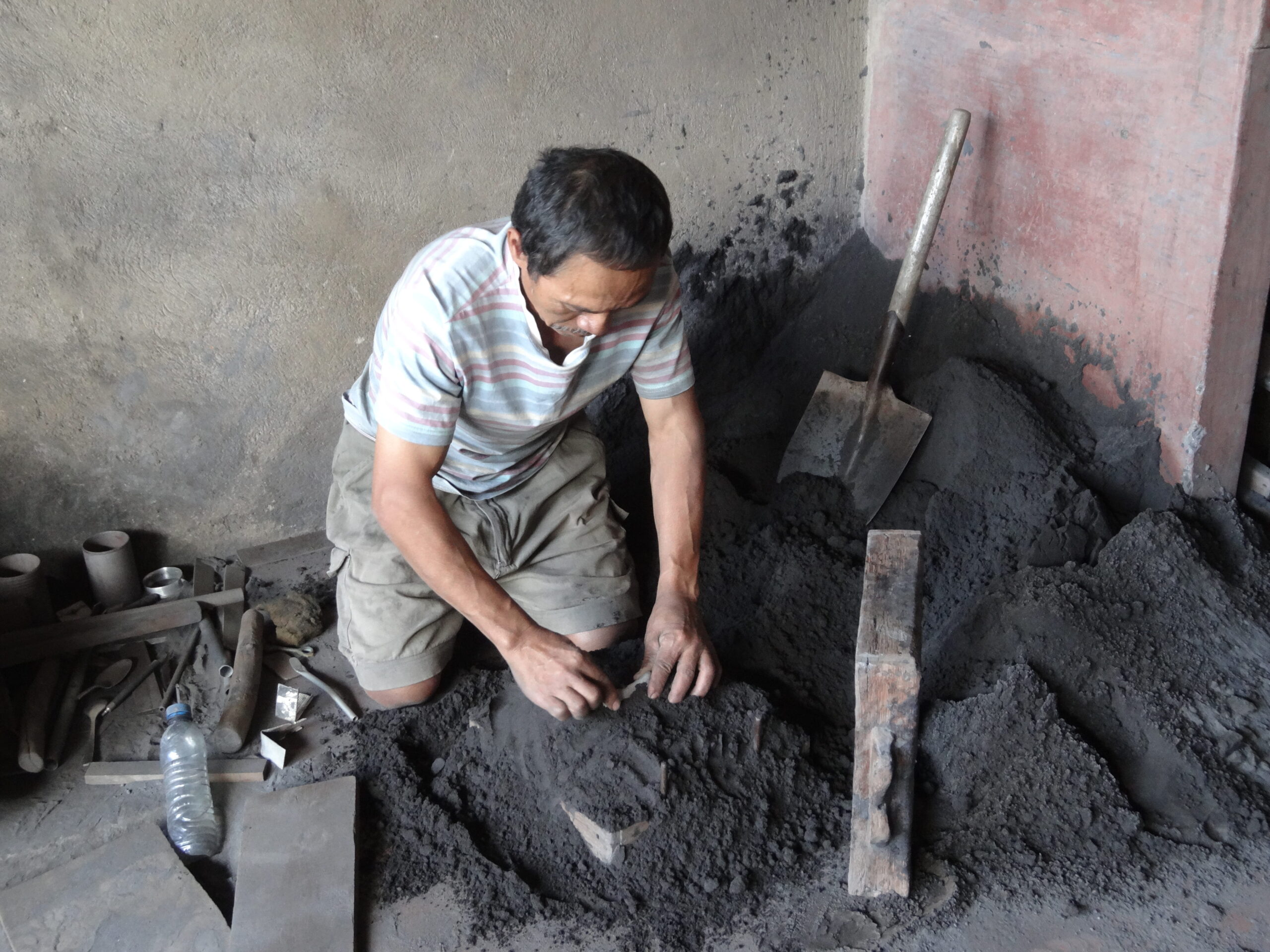
Fill the mould with sandDamp sand is packed tightly around the model in a two-part frame to capture every detail.
3
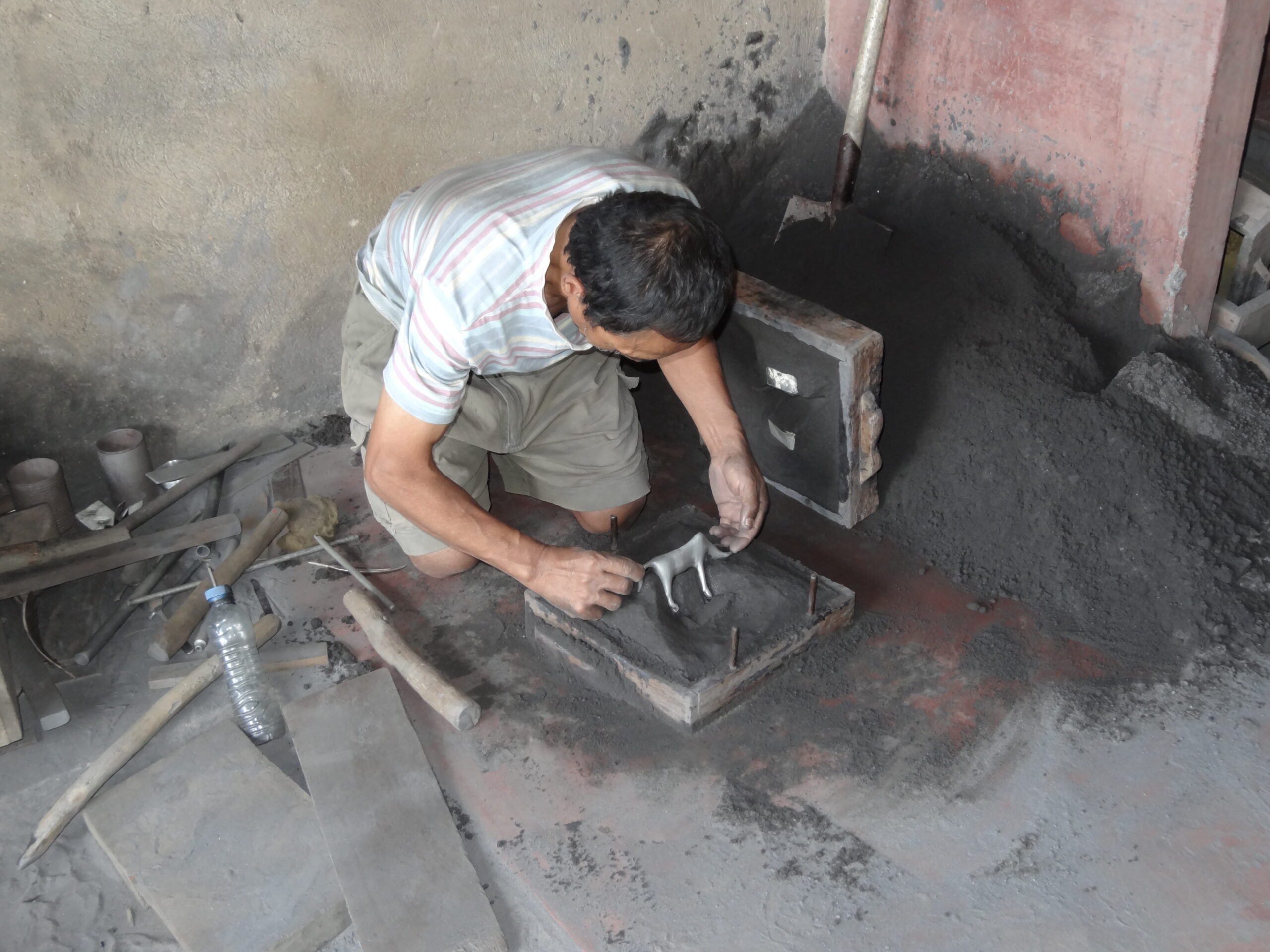
Remove the modelThe form is carefully extracted, leaving a perfect hollow in the sand ready to receive molten metal.
4
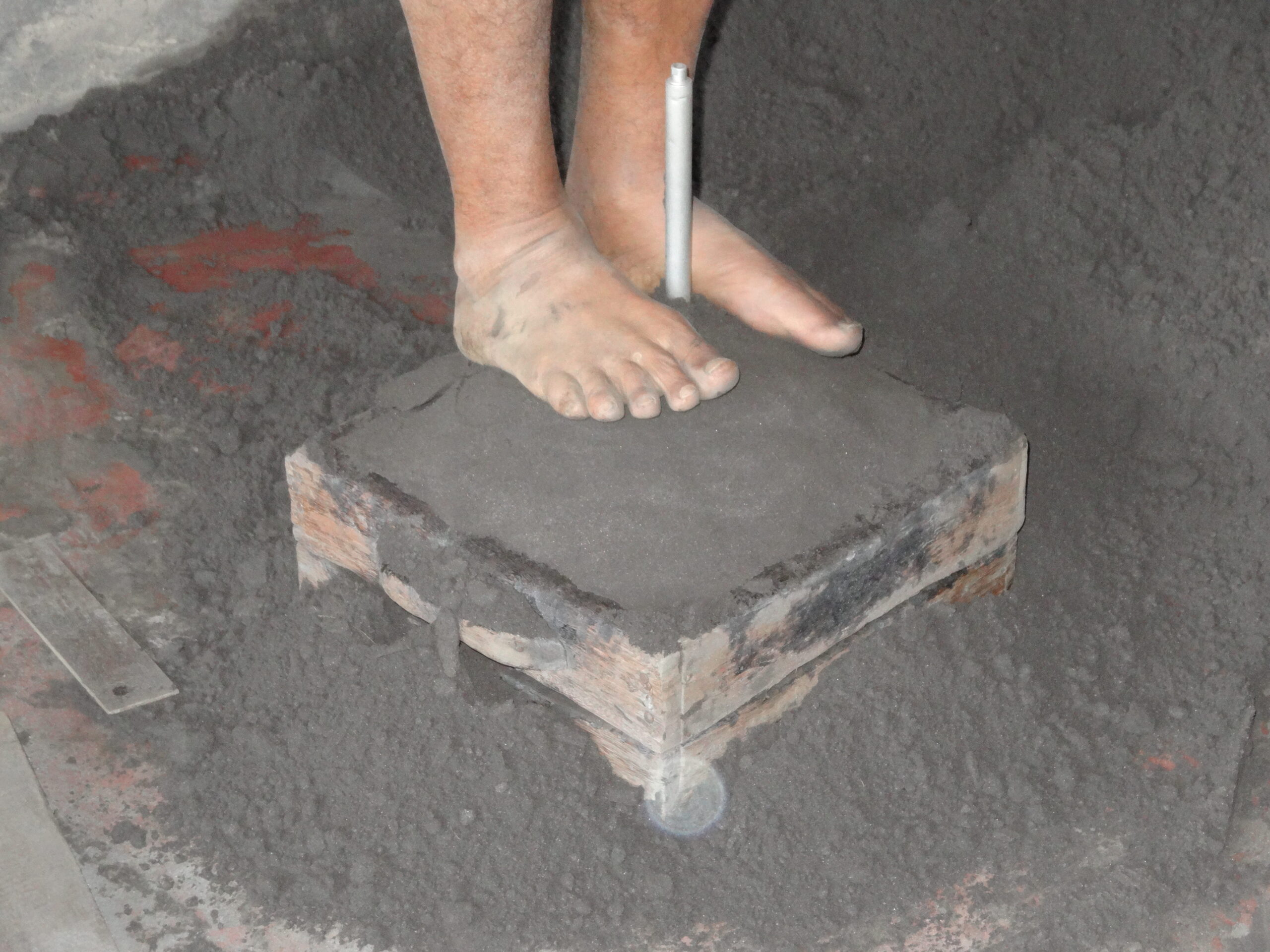
Compact the mouldThe craftsman steps on the sand frame with bare feet — feeling the consistency underfoot — to ensure a tight, void-free mould.
5
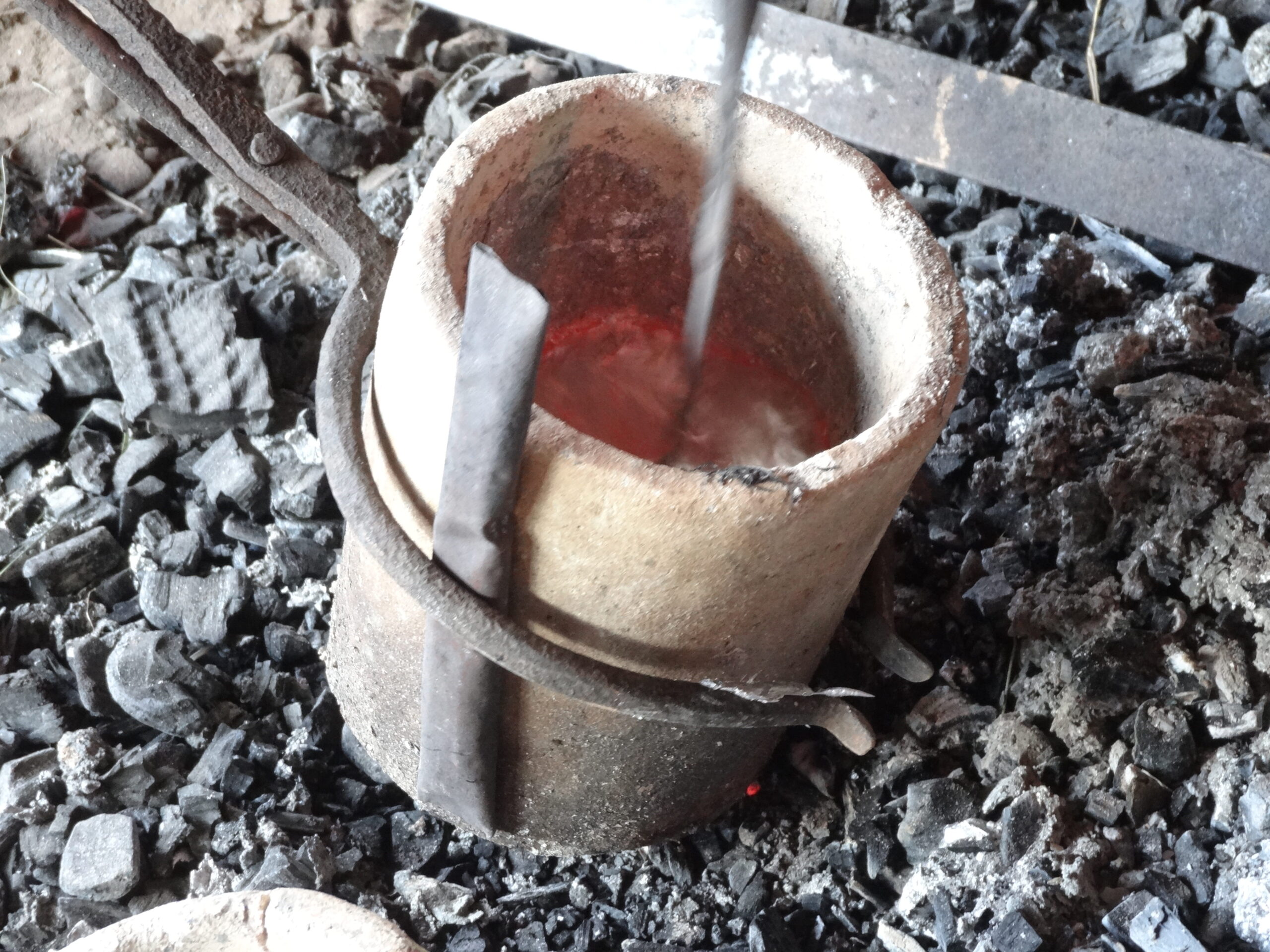
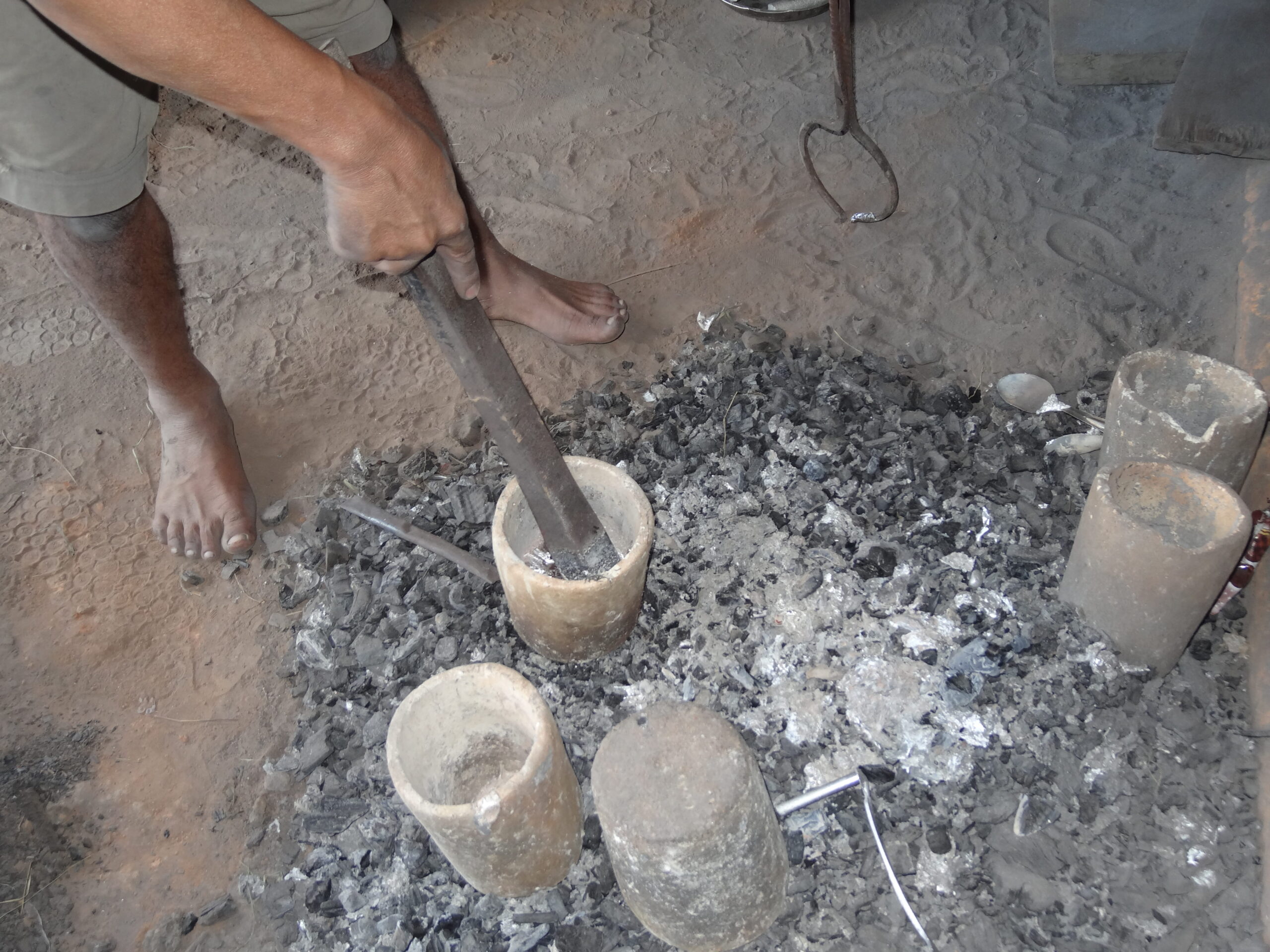
Melt & pourRecycled aluminium is heated to 660 °C. Liquid metal is gravity-poured into the mould cavity.
Step 1 – Shaping the model
1
Shape the model
Step 2 – Filling the mould with sand
2
Fill with sand
Step 3 – Removing the model
3
Remove the model
Step 4 – Compacting the mould by foot
4
Compact by foot
Step 5 – Removing impure metal before pouring
5
Skim the melt
Pouring molten aluminium
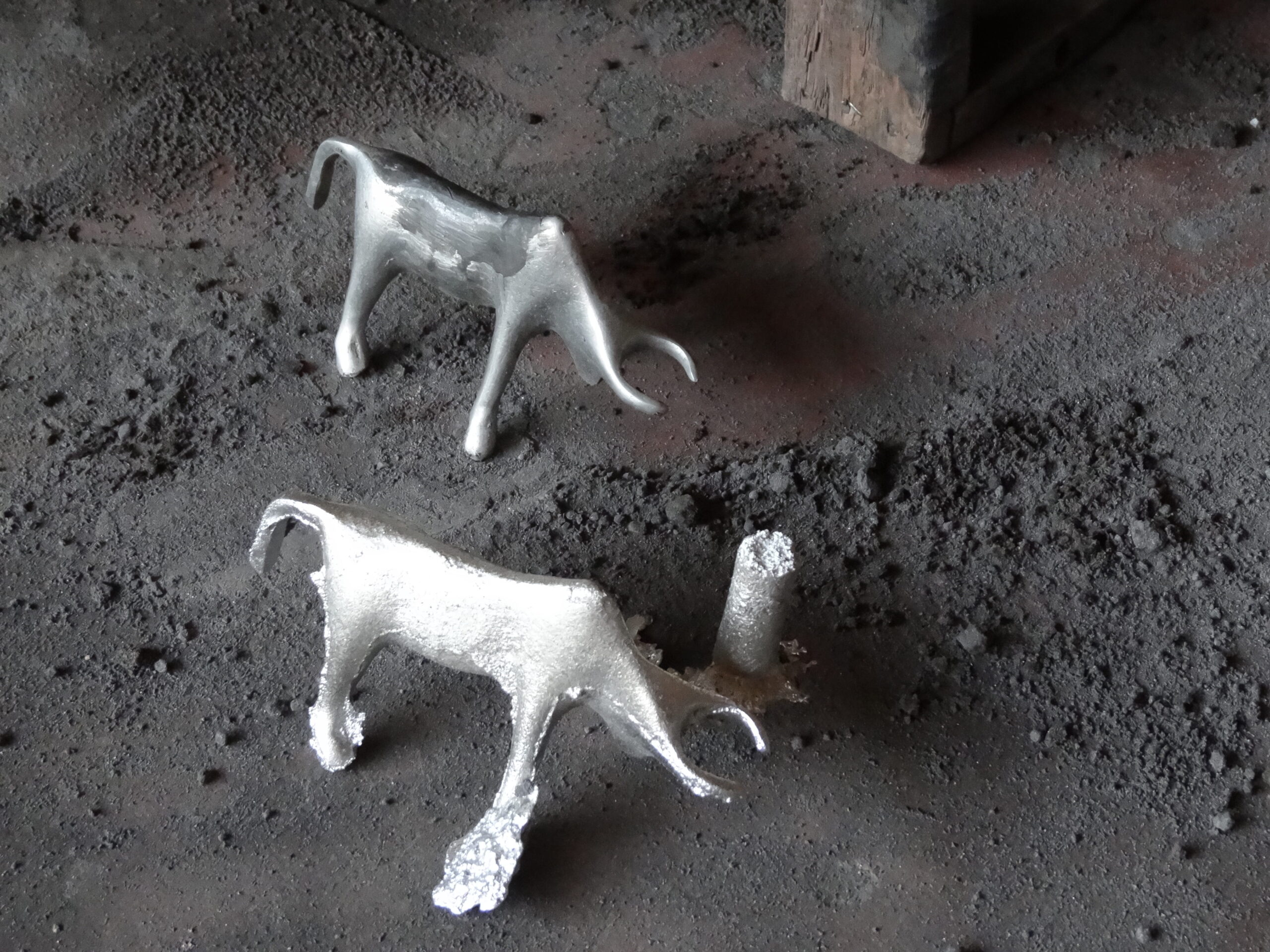
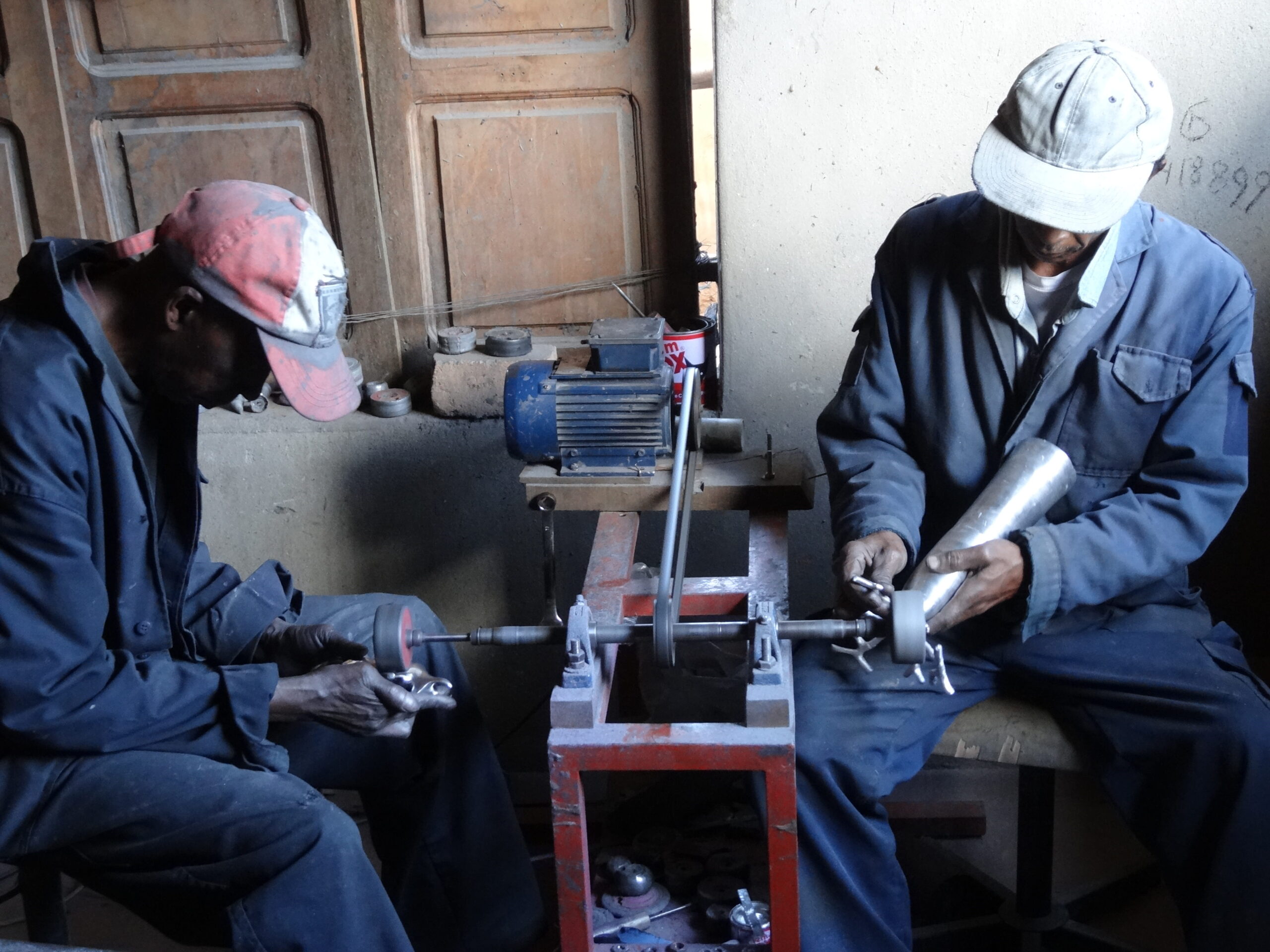
What comes out of the mould Polishing the finished piece
After the raw cast emerges from the mould, the work is only half done. Craftsmen file, weld, engrave and polish each piece until it achieves an almost mirror-like sheen — a source of pride that transforms recycled scrap into an object of genuine beauty.
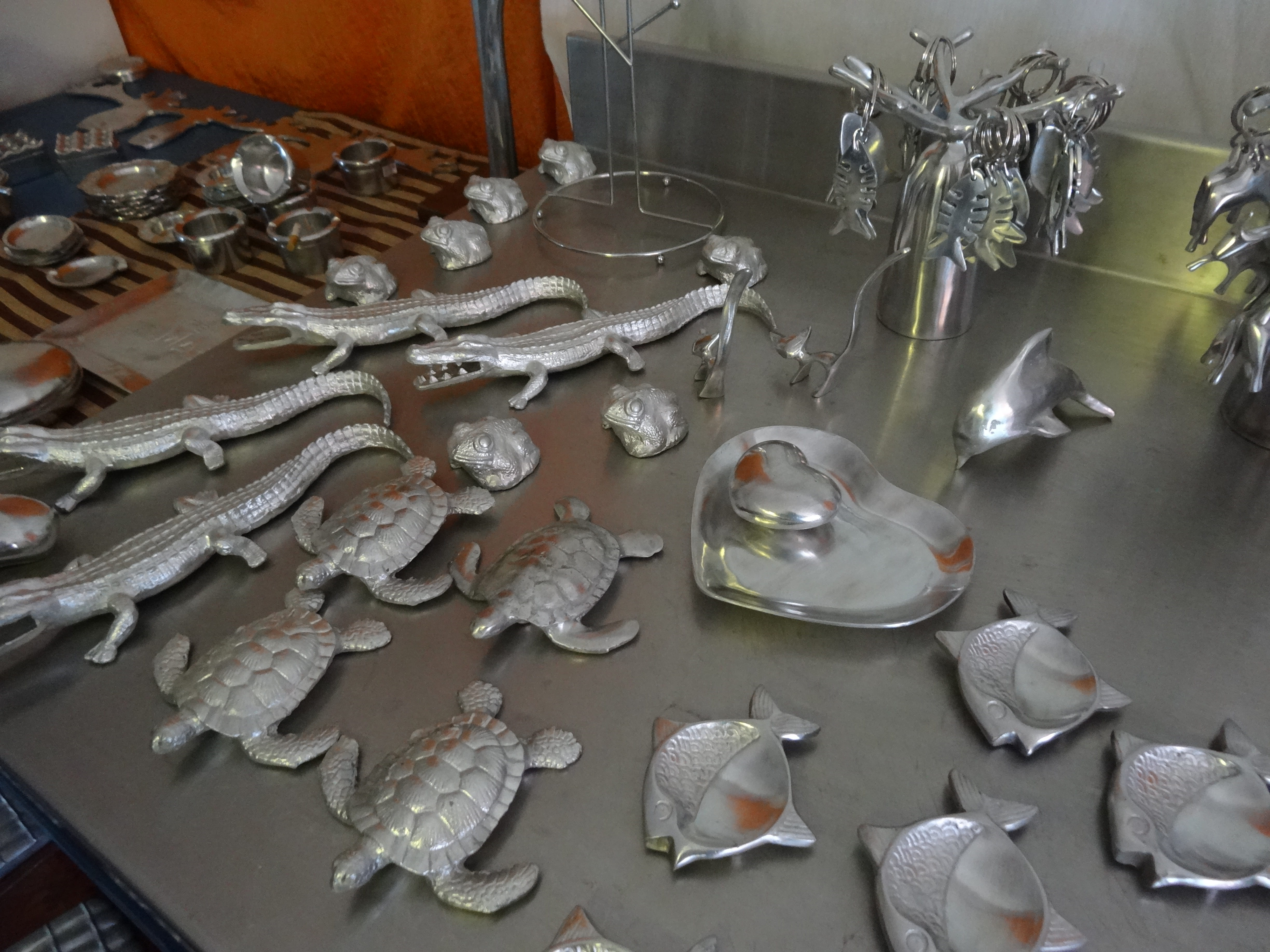
Finished Pieces
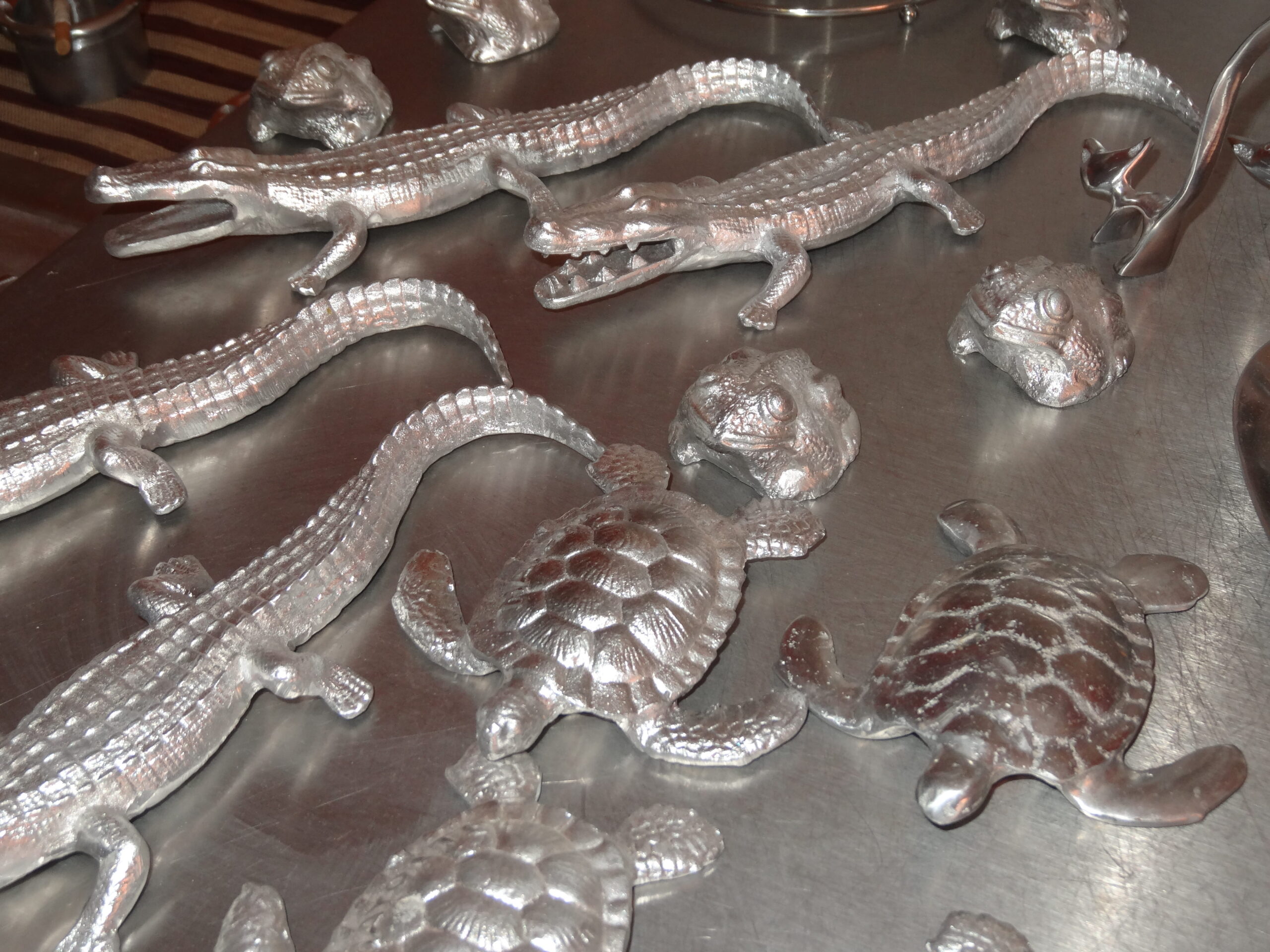
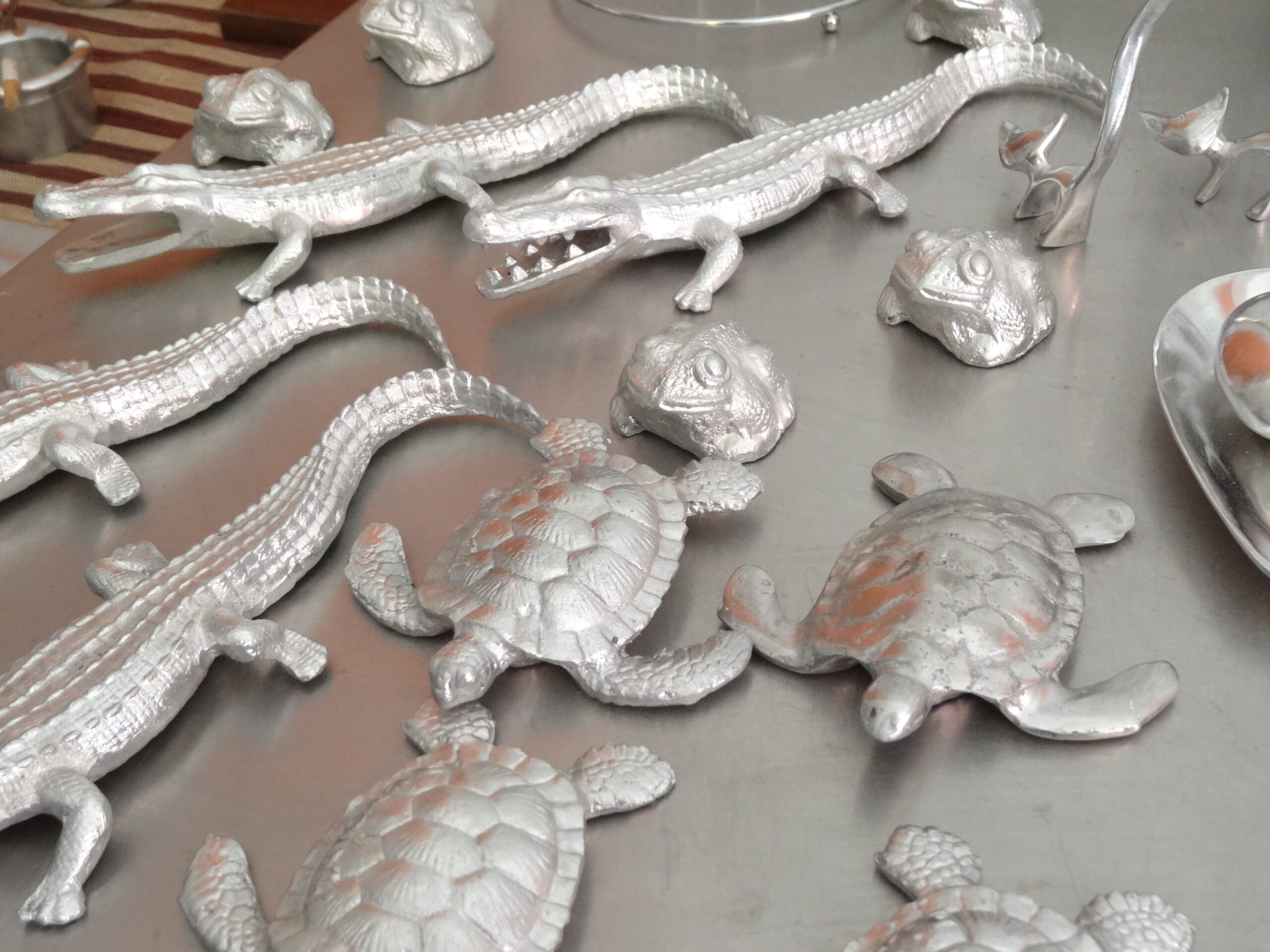
Finished aluminium pieces Finished aluminium pieces Finished aluminium pieces
One lineage, one invention

The Heritage of the Great War

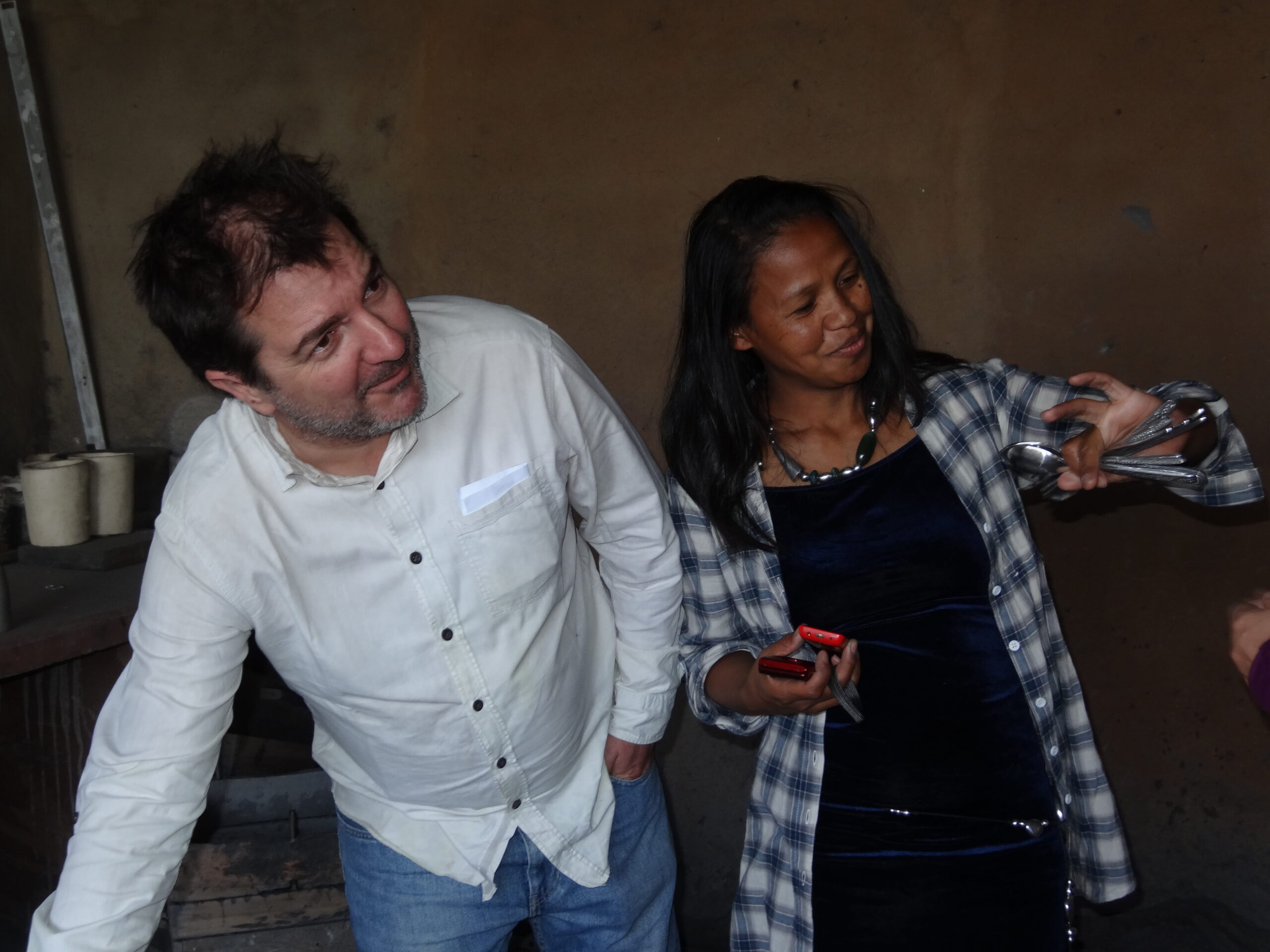
The history of the aluminium foundry in Ambatolampy comes from a quite incredible story: It all began with a man named Randriatoanina, the first generation of the Ramanantoanina Family from Ambatolampy. He was mobilised during the Second World War on the side of the Allies where he began working in metal welding for weapons. He came back to the island, and faced another war — now against the French, the insurrection of 1947 — where he was accused of taking part in a patriotic uprising. During that period, it is said that he provided the revolters with guns he made with his European experience in welding.

On returning to Ambatolampy, he began to experiment: melting scrap, shaping the sand, casting the metal. His first pieces were rudimentary, but one could get rice cooked. Within a few years, the technique spread across the whole neighbourhood, then the whole town, then the entire island. What a soldier had brought back from the war would go on to revolutionise the daily cooking of millions of Malagasy households.
1940s
Return from war. Randriatoanina discovers aluminium and senses its potential. The first hand-crafted pieces are born in Ambatolampy.
Transmission
The technique passes from father to son, from neighbourhood to neighbourhood. Ambatolampy becomes the national capital of artisanal aluminium.
Today
The craft has become an art. Craftsmen compete in creativity — from design to welding to final polishing, each piece is a signed work.
Randriatoanina's granddaughter
Living heritage
Randriatoanina's granddaughter — carrying the flame forward
Three generations on from the man who first melted scrap metal in a crucible in Ambatolampy, his granddaughter Stéphanie continues the tradition. For her, aluminium casting is not merely a livelihood or a form of art— it is a story written in metal that she intends to keep telling.
Malagasy Proverbs

Fish that share the same pot can only yield the same broth.

Those unwilling to spend on a lid eat poorly cooked rice.

Life is like the steam that escapes from the pot — by the time you notice it, it is already gone.

Broken tripod, tilted pot.

We all have our flaws — and therefore all have a duty to correct them.
Plant Fibre · Madagascar

The raphia,
fibre of an entire island

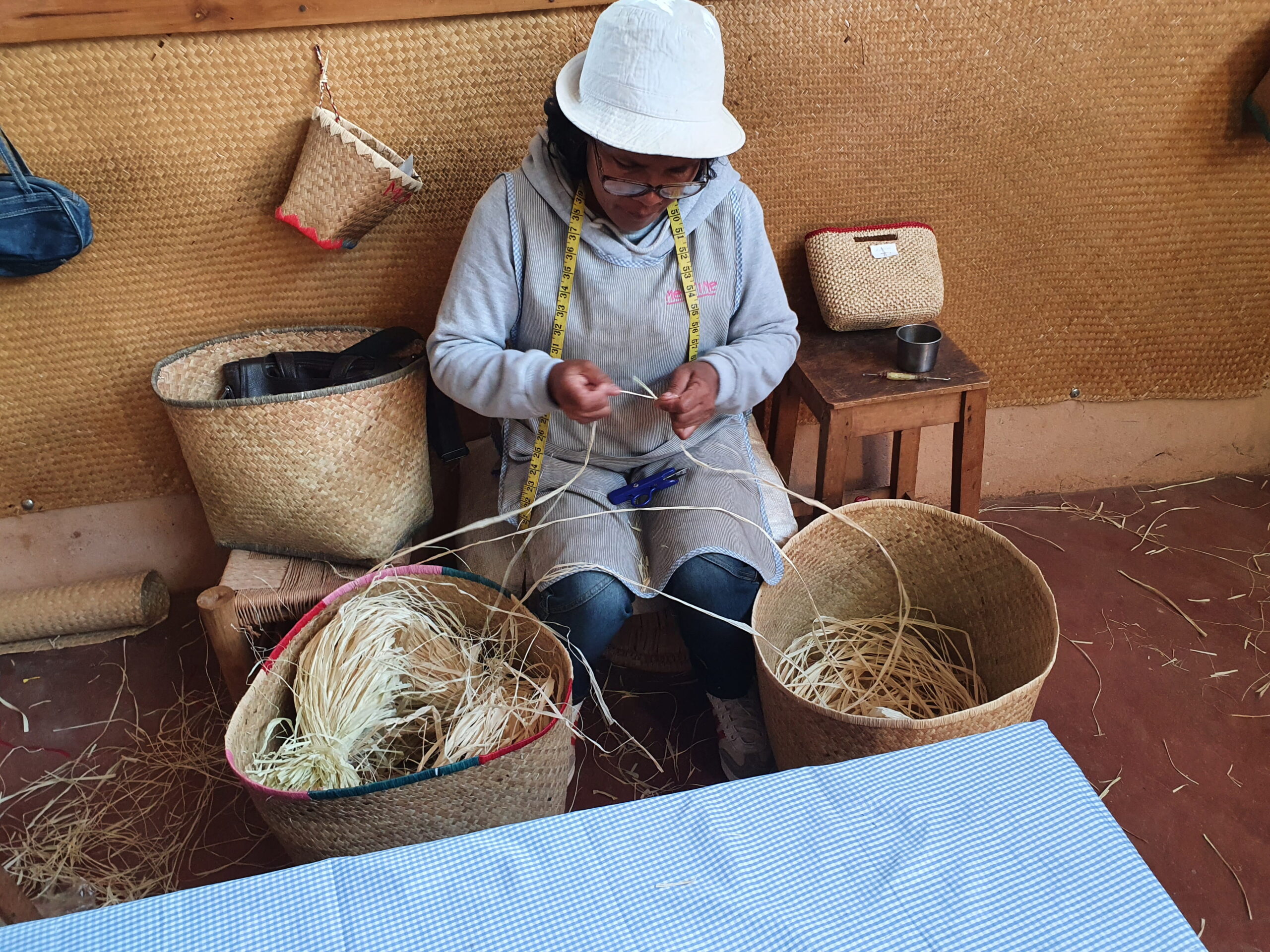
An endemic palm with giant leaves, raphia grows slowly along rivers and in the wetlands of the west. Its fibres, washed, dried and hand-dyed, have woven Malagasy daily life for centuries — and today captivate fashion houses the world over.


The raphia palm — Raphia farinifera, or rofia in Malagasy — is one of the most remarkable endemic palm species in Madagascar. Its name comes from the Greek raphis, meaning "needle," referring to the elongated shape of its fruits; farinifera, meaning "flour-bearing," evokes the starchy pulp of its stem. It can reach ten metres in height, and its leaves, among the longest in the plant kingdom, are its most immediate signature.

Raphia grows slowly. Only after about ten years can craftspeople begin to harvest its leaves, between October and May. The first fruits, in clusters, do not appear until around the twentieth year. This slow rhythm gives the plant a particular value: each fibre is the result of years of patience before any human work can even begin. The leaves are washed and dried repeatedly until the fibres become supple and strong, then dyed in vivid colours.
The Palm in Numbers
Up to 10 m tallOne of the largest endemic palms in Madagascar, recognisable by its immense pinnate leaves.
First harvest at ~10 yearsLeaves are harvested from October to May. Artisans wash and dry them repeatedly to soften the fibres.
First fruits at ~20 yearsFruit clusters only appear at advanced maturity, highlighting the patience this plant demands.
Habitat: west and interiorSwampy areas, rainforests, riverbanks — particularly in the Mahajanga region.
Raphia weaving by hand
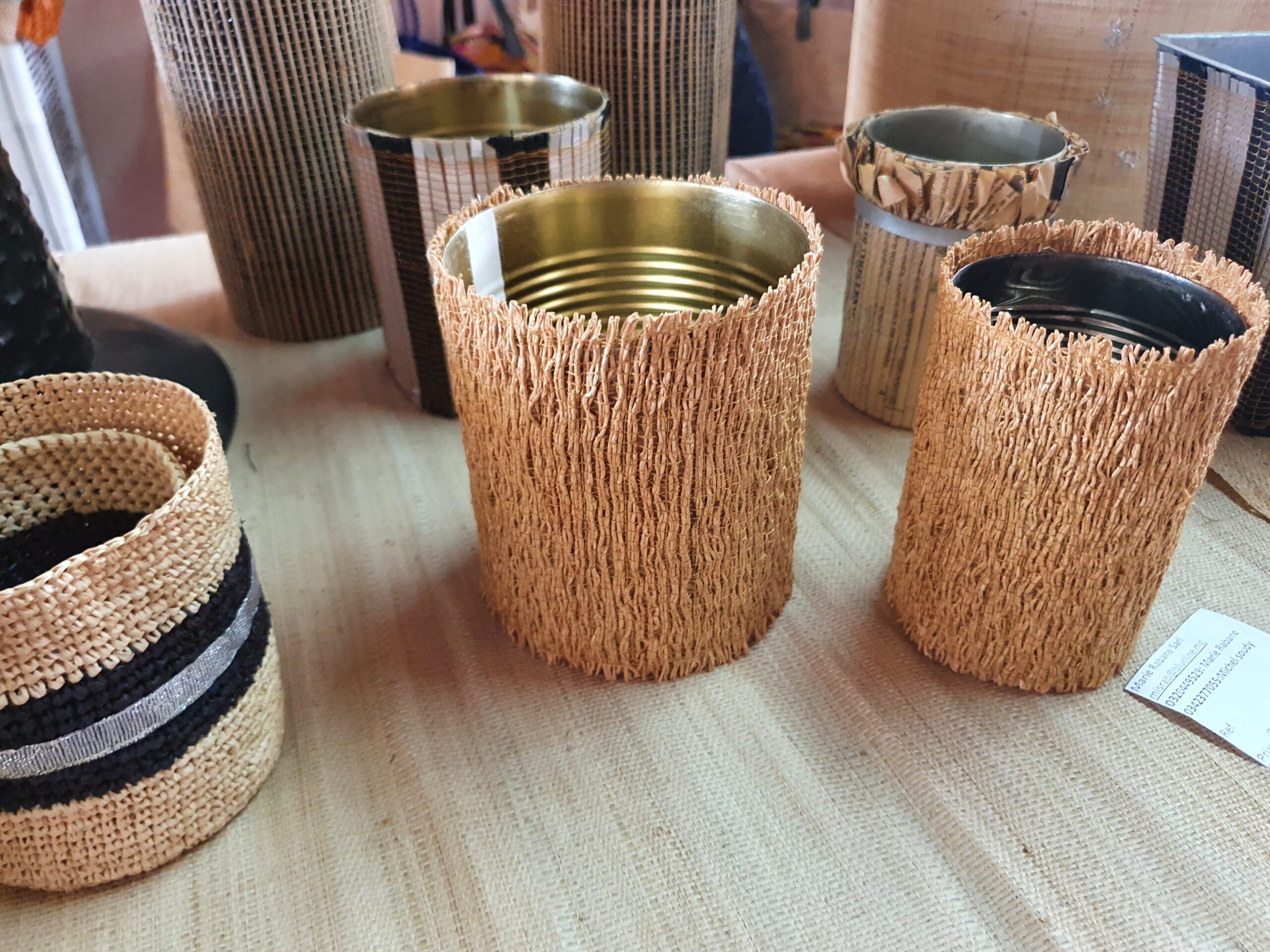
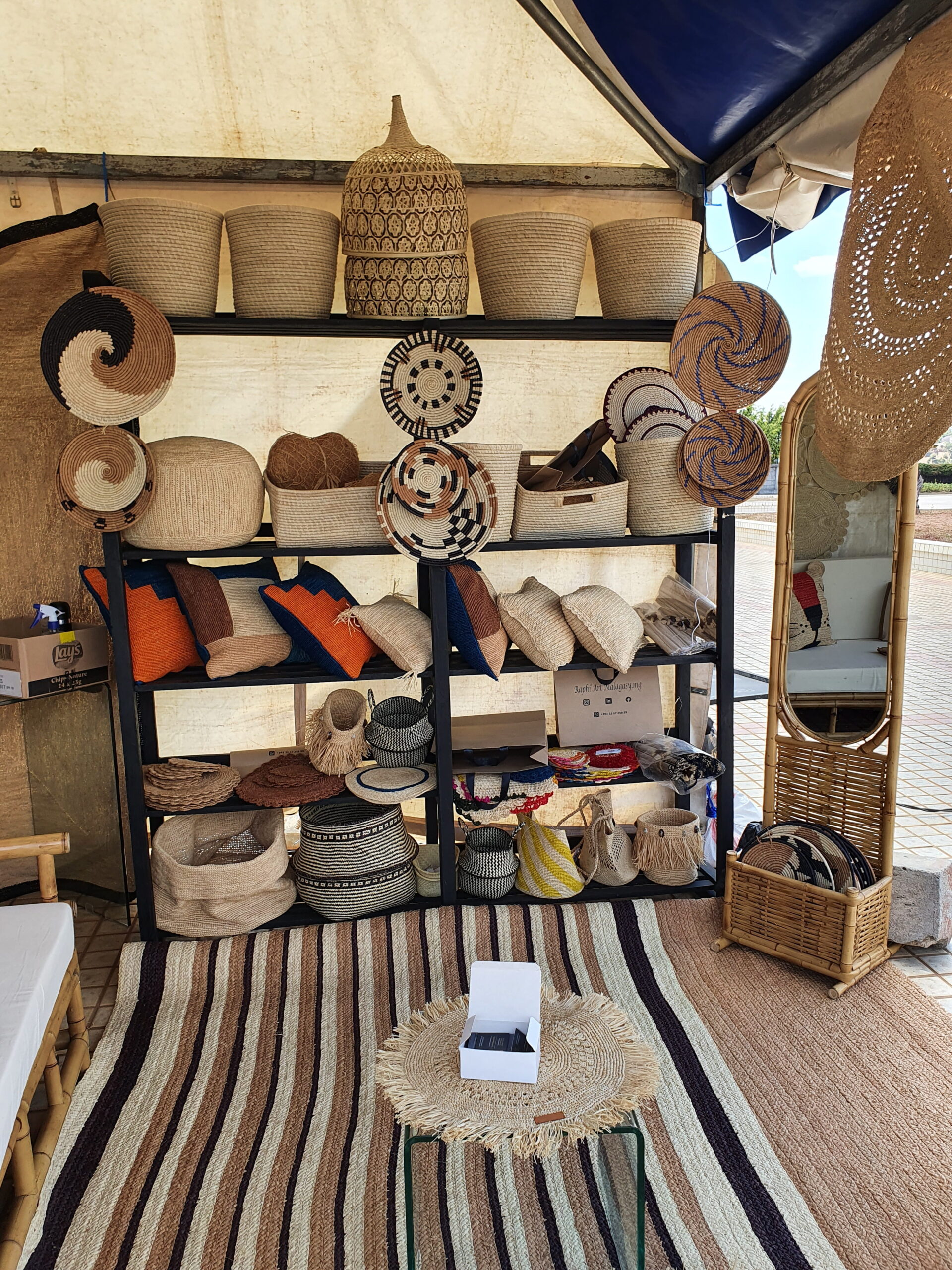
Raphia market stall Raphia vases
Mats & rugs
Hand-woven, with traditional geometric patterns.
Baskets & bags
From the market basket to the luxury handbag, carefully woven.
Hats
Lightweight, finely woven, worn across the island.
Rugs & décor
Decorative objects highly sought after by travellers.
Roofing
Palm fronds have covered coastal huts for centuries.
Fashion & export
Raw material for high-end international collections.
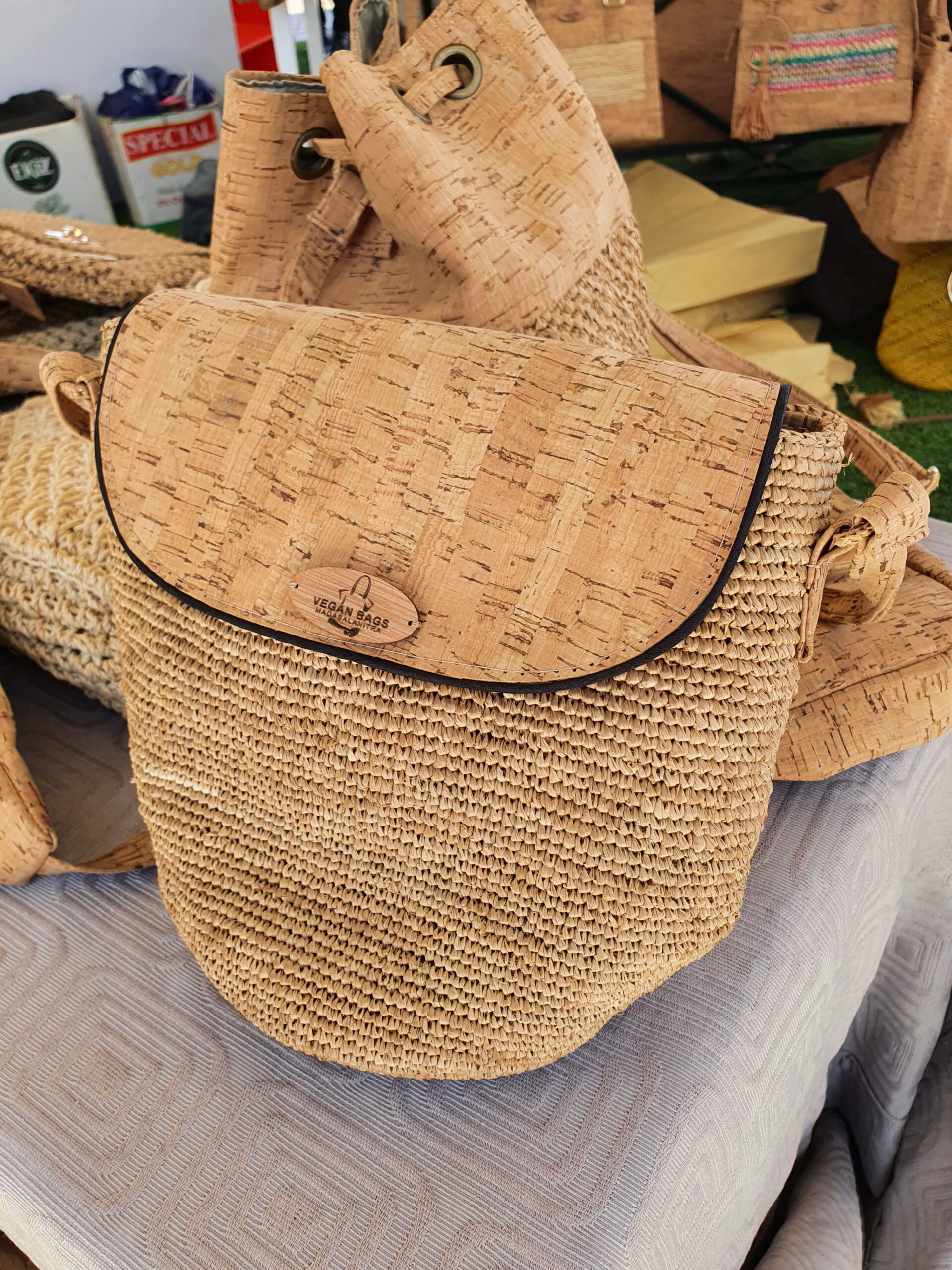
Raphia bag — tradition meets contemporary design
Raphia bag — where traditional weaving meets contemporary design
Raphia on the Catwalk
Ethical Fashion · Madagascar
Made for a Woman
Founded by Eileen Akbaraly, this Malagasy house places raphia at the heart of an approach combining traditional craftsmanship with contemporary design. Each piece celebrates the skills of local weavers and carries the identity of the island to an international audience.
Leathergoods · Madagascar
Kaloes
A Malagasy leathergoods house that pairs raphia with fine leathers to create accessories at the intersection of tradition and modern elegance. Kaloes embodies a new generation of African brands exporting refined craftsmanship without ever distorting it.
Intangible Heritage · UNESCO 2003

The Zafimaniry,
sculptors of the forest

South of Ambositra, in villages perched at 1,900 metres altitude, an entire people has been carving wood for centuries. Their geometric patterns cover everything from spoons to houses. In 2003, UNESCO recognised their art as an Intangible Cultural Heritage of Humanity.


To reach Antoetra, the emblematic Zafimaniry village, you must set off from the Ivato centre and tackle 25 kilometres of track. The journey is slow, sometimes bumpy — but for anyone with a feeling for woodwork, every jolt is forgotten upon arrival. The village opens onto a world apart: houses assembled entirely without a single nail, windows and doors covered in chiselled patterns, craftsmen at work in the golden afternoon light.

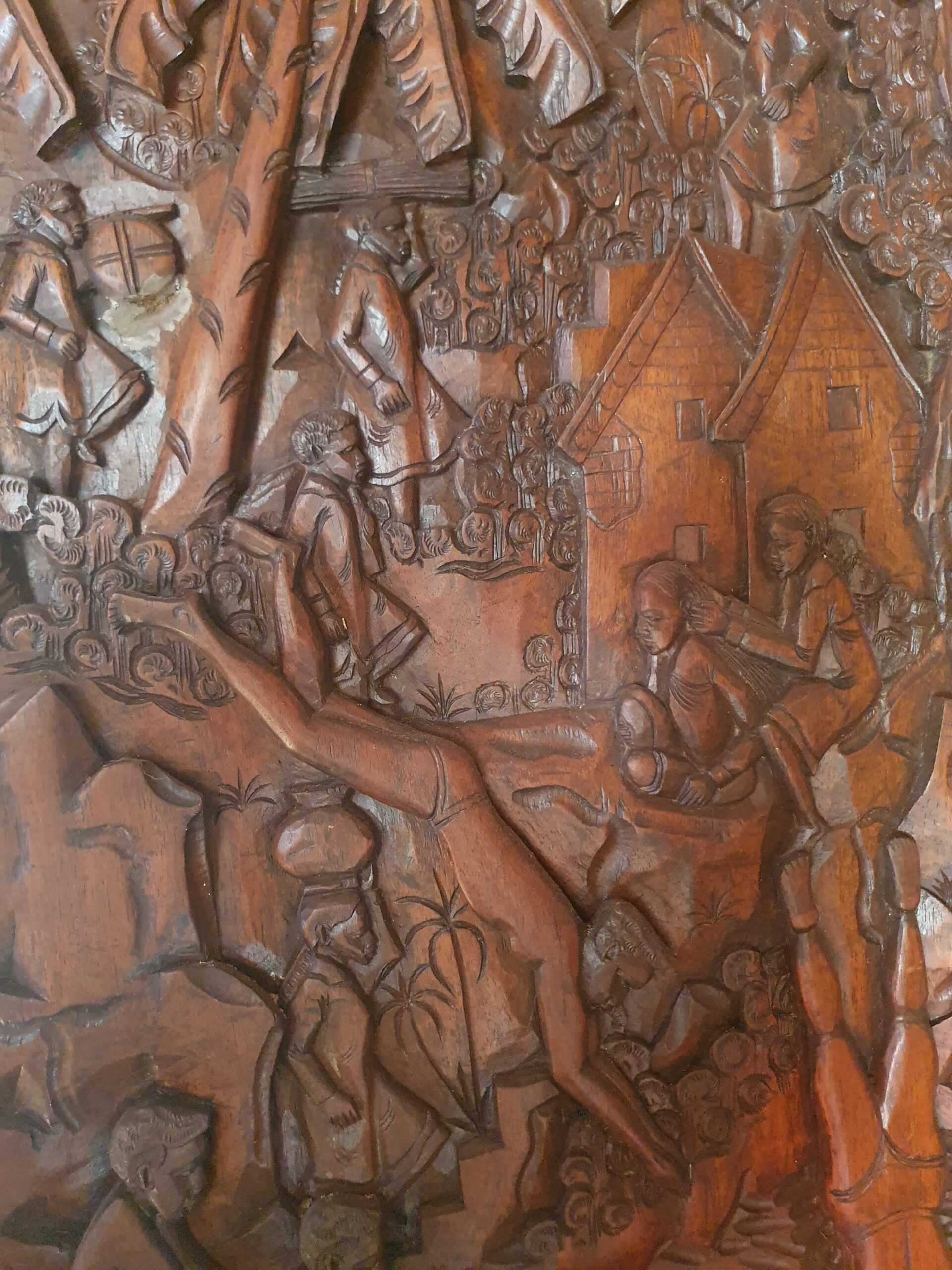
The Zafimaniry have practised wood carving for generations, passing their knowledge from father to son, from mother to daughter. Each village has developed its own subtle variations, while sharing a common visual language: geometric patterns inspired by nature, symbolic interlacing, rhythmic repetitions reminiscent of woven mats. Visitors are welcomed warmly and can observe — and acquire — the full range of Zafimaniry production.
What you find here
UNESCO · Intangible Heritage · 2003
Decorative piecesStatues, carved chess sets, ornate boxes — each piece is unique and bears the mark of its village of origin.
Everyday objectsSpoons, large wooden jars, spatulas: the craft gesture extends to the simplest everyday uses.
Nail-free architectureHouses are assembled with precision, without any metal. Windows, doors and gables are adorned with the same patterns as the portable sculptures.
The forest as a total resourcePrecious timber, wild honey, medicinal plants, fuel — the surrounding forest provides everything the community needs.
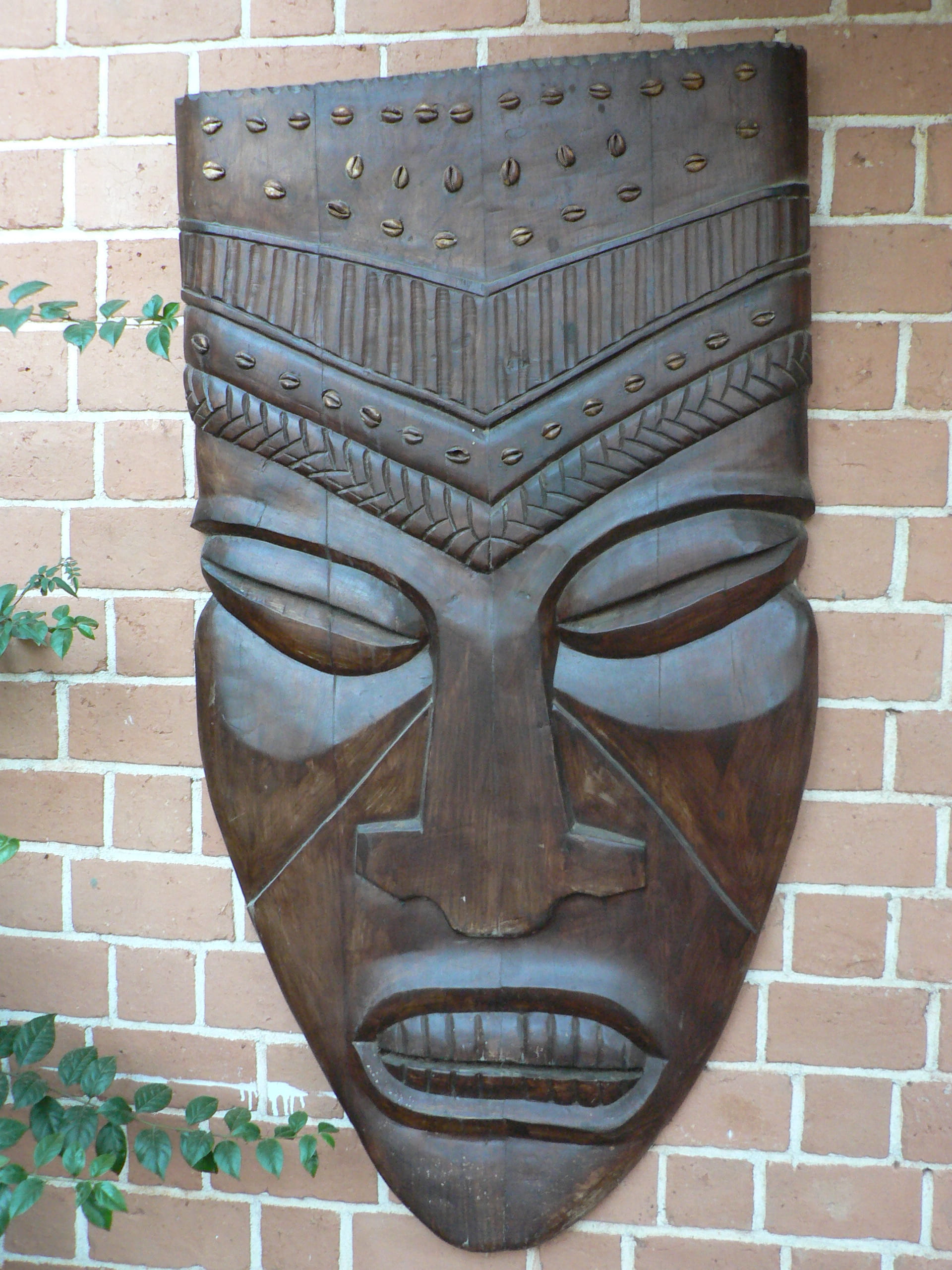
Zafimaniry wood carving Zafimaniry carved wooden face panel
Nested squares
Symbol of the solidity of the home and family.
Radiating circles
Evoke the sun, source of life and light.
Nested triangles
Represent mountains and social hierarchy.
Undulating interlace
Inspired by nature — water, vines, vegetation.
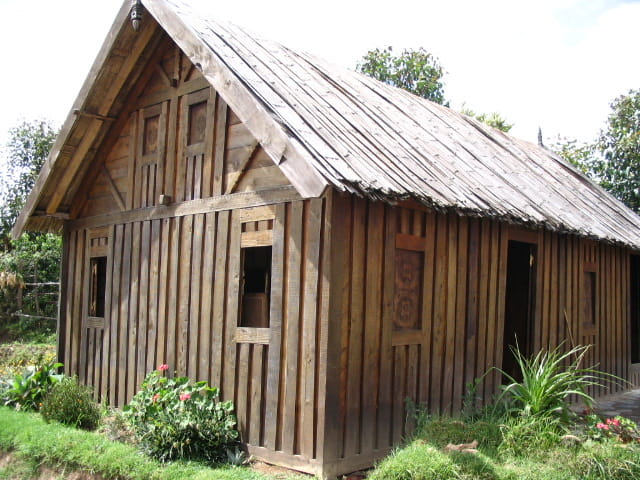
A Zafimaniry house with carved decorations
A Zafimaniry house — assembled without nails, every surface a work of art
Architecture as a work of art
The Zafimaniry house — assembled without a single nail
Each element is cut and fitted together with remarkable precision from often precious timber. The latticed windows, carved doors and ornate gables bear the same decorative patterns as the pieces sold to visitors. For the Zafimaniry, the house is not merely a shelter: it is the craftsman's most accomplished work.
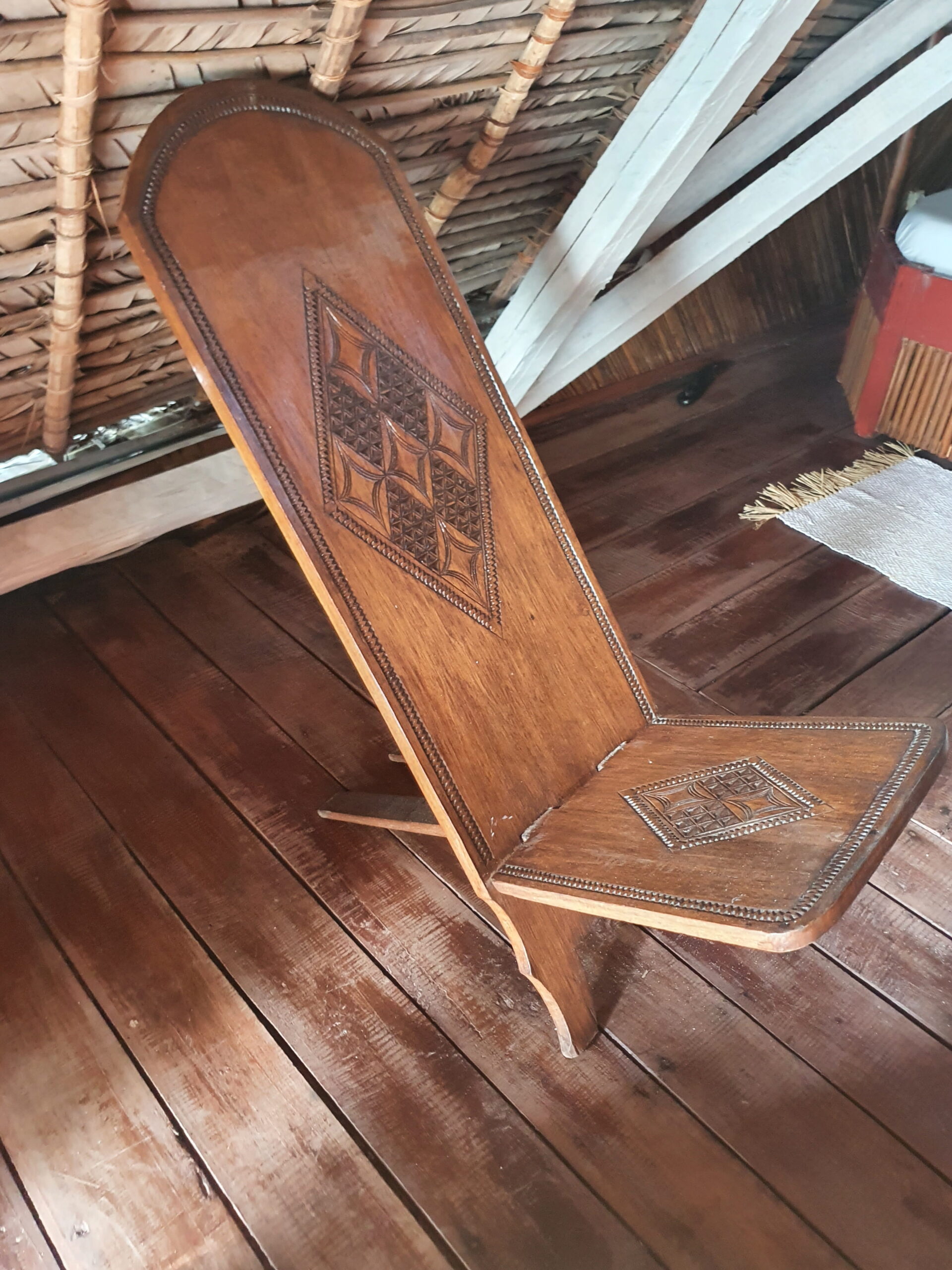
Zafimaniry carved object
A carved Zafimaniry object — each piece carries meaning encoded in its motifs
If you pass this way…
A walk through a Zafimaniry village is an experience you do not set down easily.
The road from Ambositra is long and the track demanding, but the encounter with this people of craftsmen — their precise gestures, their ornate houses, their generous forest — ranks among the most lasting memories Madagascar can offer. Let yourself be guided, take the time to watch them work, and leave with an object that has a story.
Photography · Fianarantsoa

Pierrot Men —
Seeing Madagascar

Madagascar's most celebrated photographer. A rare chance to walk beside him — and see the island through his eyes.

Fianarantsoa Betsileo Country Day Workshop Limited Availability By Request

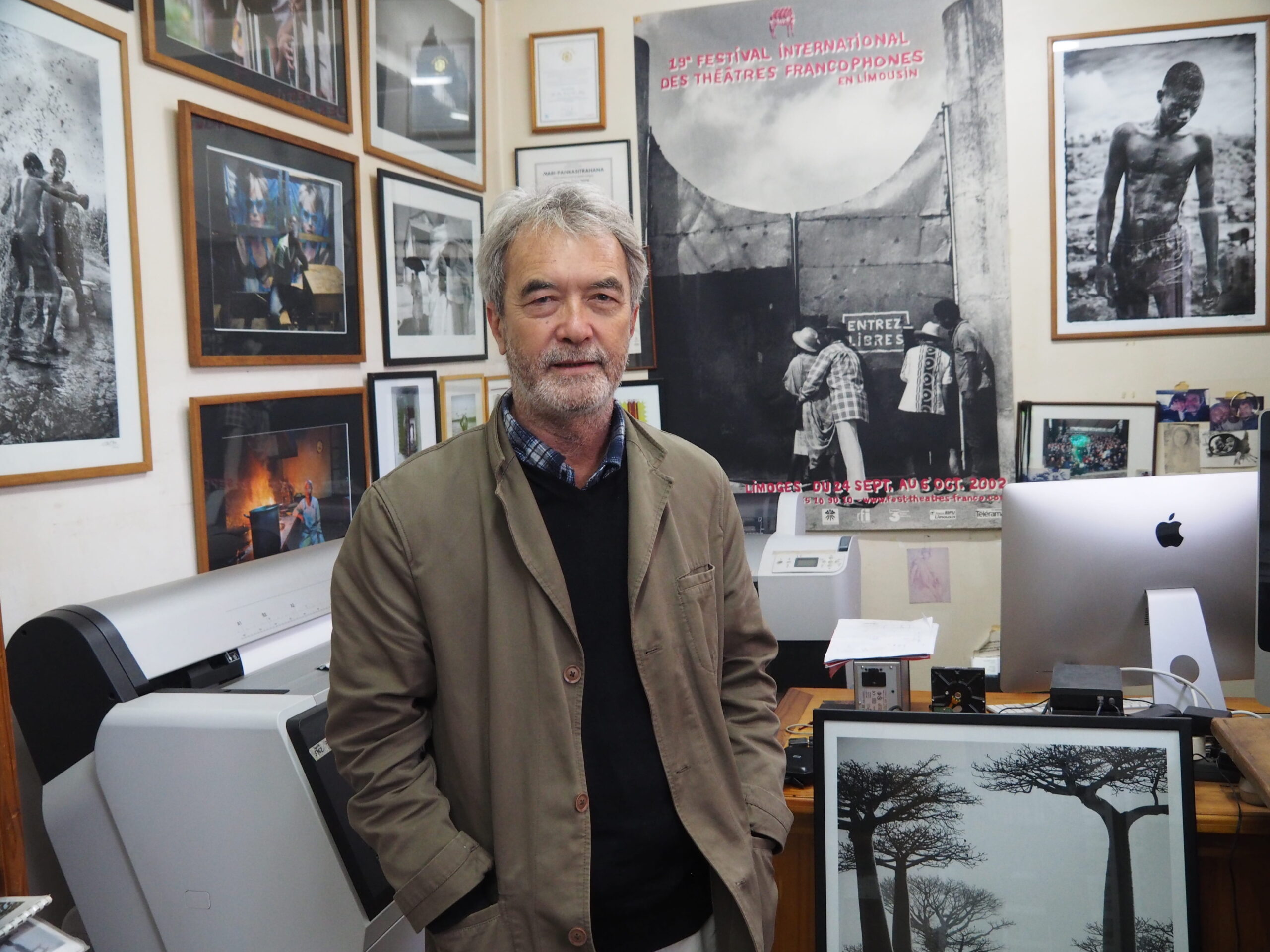
Pierrot Men, photographer
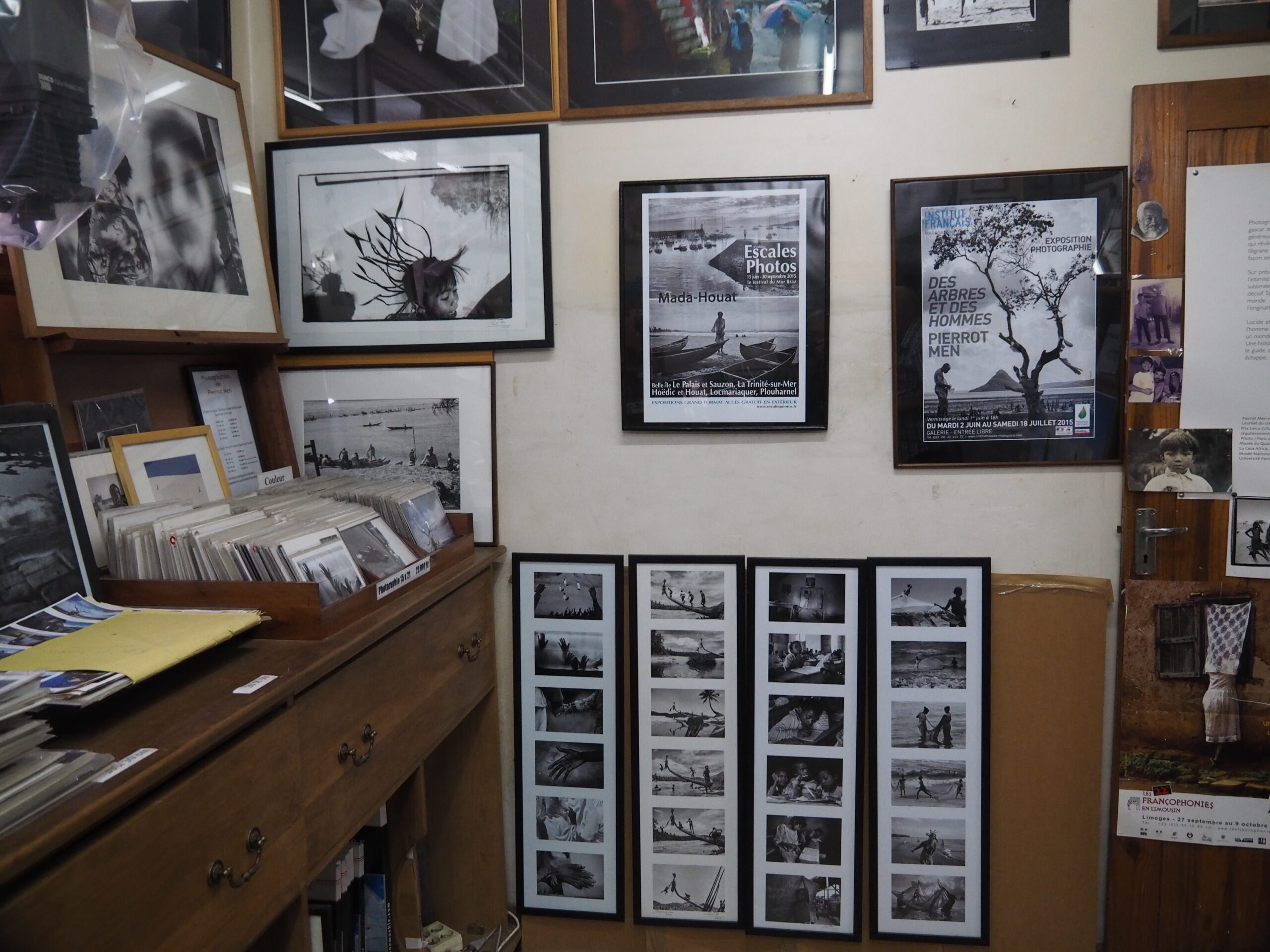
Pierrot Men's studio in Fianarantsoa

Photography in Madagascar is often associated with lemurs, baobab silhouettes and dramatic wildlife — but the island holds far deeper layers, human and emotional, that most images never reach. Pierrot Men has spent a lifetime finding them.

Born in 1954, Pierrot MEN grew up in a very rural area in southeastern Madagascar. His family has Chinese roots: his grandfather immigrated to Madagascar nearly a hundred years ago. From a young age, Pierrot was interested in photography, light, and art. Thanks to friends, he acquired his first camera and gradually built a reputation as Madagascar's leading photographer.

He has a special love for the simple, rural life of his homeland and whenever possible, he travels into the hilly Betsileo region to observe and photograph. "Sometimes I spend an entire day out and don't take a single photo. But I absorb everything with my eyes," he told PRIORI founder Franz Stadelmann.

Pierrot Men has captured the image of Madagascar with his Black and White style and displayed it across the world. He has been honored in countless exhibitions and received numerous awards for it. If you ever come to Fianarantsoa, you might get the opportunity to visit his very modest office in which he has been working for more than 30 years. PRIORI offers a day excursion with Pierrot MEN as part of its customized tours. Naturally, this depends on the photographer's availability.

30+
Years
working in Fianarantsoa
Postcards
shaping Madagascar's image
1
Studio
still the same, still modest
Awards & Achievements
Year
Award
Location
1994
Mother Jones Photography Contest
San Francisco
1997
Jeux de la Francophonie
Madagascar
2000
UNEP/Canon Prize
International