National Park · Boeny Region · North-West Madagascar
Ankarafantsika
National Park
A vast expanse of dry forest, gallery woodland, and shimmering lakes, home to rare lemurs and one of Madagascar's richest bird assemblages, straddling the road between Antananarivo and Mahajanga.
About the Park
Dry forests, gallery woodland, and the Ravelobe Lake
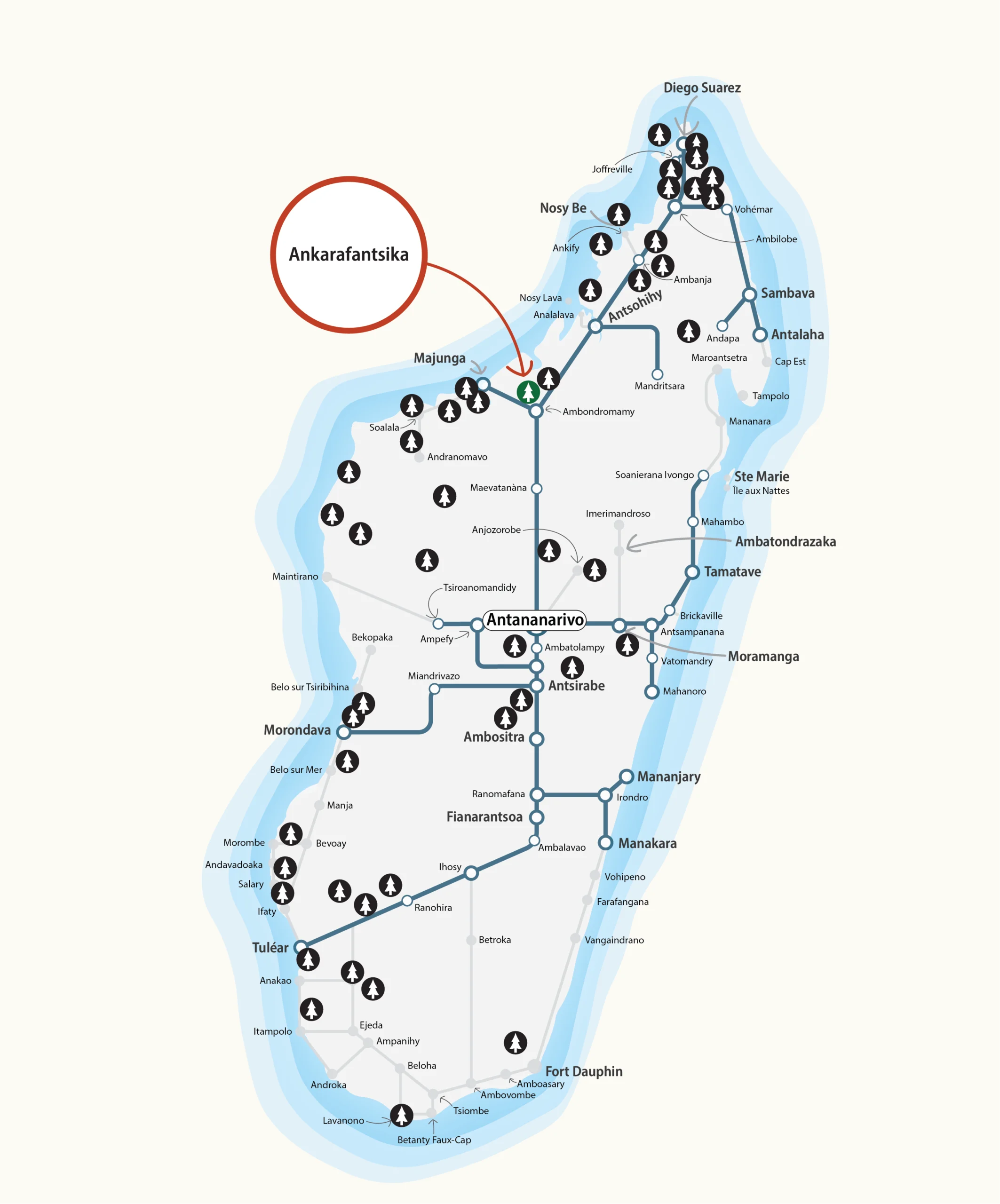
Ankarafantsika National Park lies in the Boeny Region of north-west Madagascar, straddling National Route 4, 450 km from Antananarivo and 115 km south of Mahajanga. Bounded to the east by the Mahajamba River and to the west by the Betsiboka, the park spans the districts of Marovoay and Ambato-Boeni.
Originally established as the Strict Nature Reserve of Ankarafantsika in 1927, one of Madagascar’s oldest protected areas, it was subsequently reclassified in 1966, incorporating classified forest reserves from 1929 and the Ampijoroa Forestry Station, before being formally elevated to National Park status in 2002. Its boundaries were last revised in 2015.
From lakeside boat excursions on Ravelobe to rare lemur encounters in ancient dry forest, Ankarafantsika offers some of the most accessible wilderness in western Madagascar, just a few hours from the capital.
Key Fauna & Flora
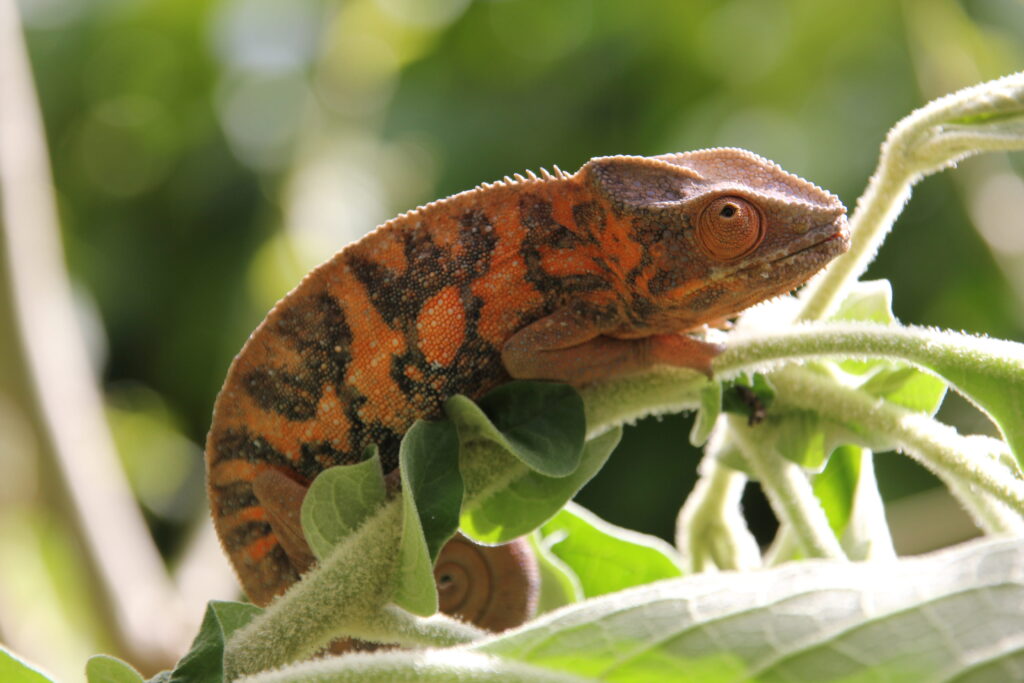
Rare lemurs and a forest rich with birds
The park’s vegetation forms a rich mosaic: dense dry forest dominates the uplands, transitioning into natural dry thickets, riparian forest occupying the lowlands, and gallery forest threading through valleys and along lake shores. This layered landscape sustains an exceptional concentration of endemic wildlife.
Culture & Local Communities
The Sakalava people of the western plains
The communities surrounding the park are highly heterogeneous, drawing together people from across Madagascar. The dominant ethnic group is the Sakalava, a historically prominent people of the western regions whose agricultural traditions are deeply rooted in the landscape.
The buffer zone population is composed primarily of farmers, whose livelihoods are closely tied to the land and waterways that define the park’s edges. Engagement with local communities is central to the park’s long-term conservation model.
Marked Circuits
Eight trails, a boardwalk, and lake by boat
15 km of developed circuits depart from the Ampijoroa entrance, crossing a 107 m footbridge and a 25 m steel bridge, with two panoramic viewpoints and boat excursions on Lake Ravelobe. It is advisable to consult park management directly for the most suitable circuits, guides, and current access conditions.
-
8 Marked Circuits15 km of trails in total, with rest areas throughout
15 km total -
Ravelobe Footbridge107 m suspended walkway over the forest canopy
Landmark -
Steel Bridge25 m crossing over a forest waterway
Landmark -
Panoramic ViewpointsTwo belvedere platforms overlooking the park
2 viewpoints -
Boat Excursion — Lake RavelobeWildlife watching by boat on the park's iconic lake
Water
All facilities powered by solar energy. Located at Ampijoroa.
North-West Madagascar, Boeny Region
Ankarafantsika straddles National Route 4 in north-west Madagascar, making it one of the country’s most accessible major parks. It sits midway between Antananarivo and the coastal city of Mahajanga, and can be conveniently visited as a stop on the overland journey between the two.