Culture Guide
Malagasy Culture —
Customs, Rituals & Fady
Madagascar's culture is very rich and diverse. Getting familiar with some of its customs is definitely a plus should you decide to go there.
If you're planning a trip to Madagascar, it's worth taking some time to understand the following customs, as they can make your trip more vivid and help you avoid mistakes.
Prohibitions & Taboos
Fady — The Unwritten Rules
Across Madagascar, fady are a set of Malagasy superstitions that are deeply embedded in the culture. They are essentially unwritten rules that people follow very closely. They can apply to a whole region, a village, a family, or even one person. In some places, you may be forbidden from planting certain crops; in other regions, some families will not eat goat meat, while others avoid certain foods on specific days. They extend to many aspects of daily life you are likely to encounter.
People take fady very seriously, as breaking one is believed to bring illness or bad luck. Historically, many of the fady observed today are believed to come from the ancestors (Razana); however, new ones can emerge after important events. You should respect the fady of each place you enter, as doing so is part of honouring the spiritual world.
Even the phrase for "excuse me" — aza fady (Azafady) — means "may this not be taboo."
A few Fady you might wanna remember
-
Don't point at a tomb. It is believed to bring harm to your finger or cause illness. If you find yourself doing it, tap that finger three times with your other hand.
-
Don't kick a wall. It is said to bring harm to a grandparent.
-
Don't whistle at night. It's believed to summon spirits. If it happens, throw salt over your left shoulder without looking back.
-
Don't wear red or eat pork around some seas, lakes, and rivers.
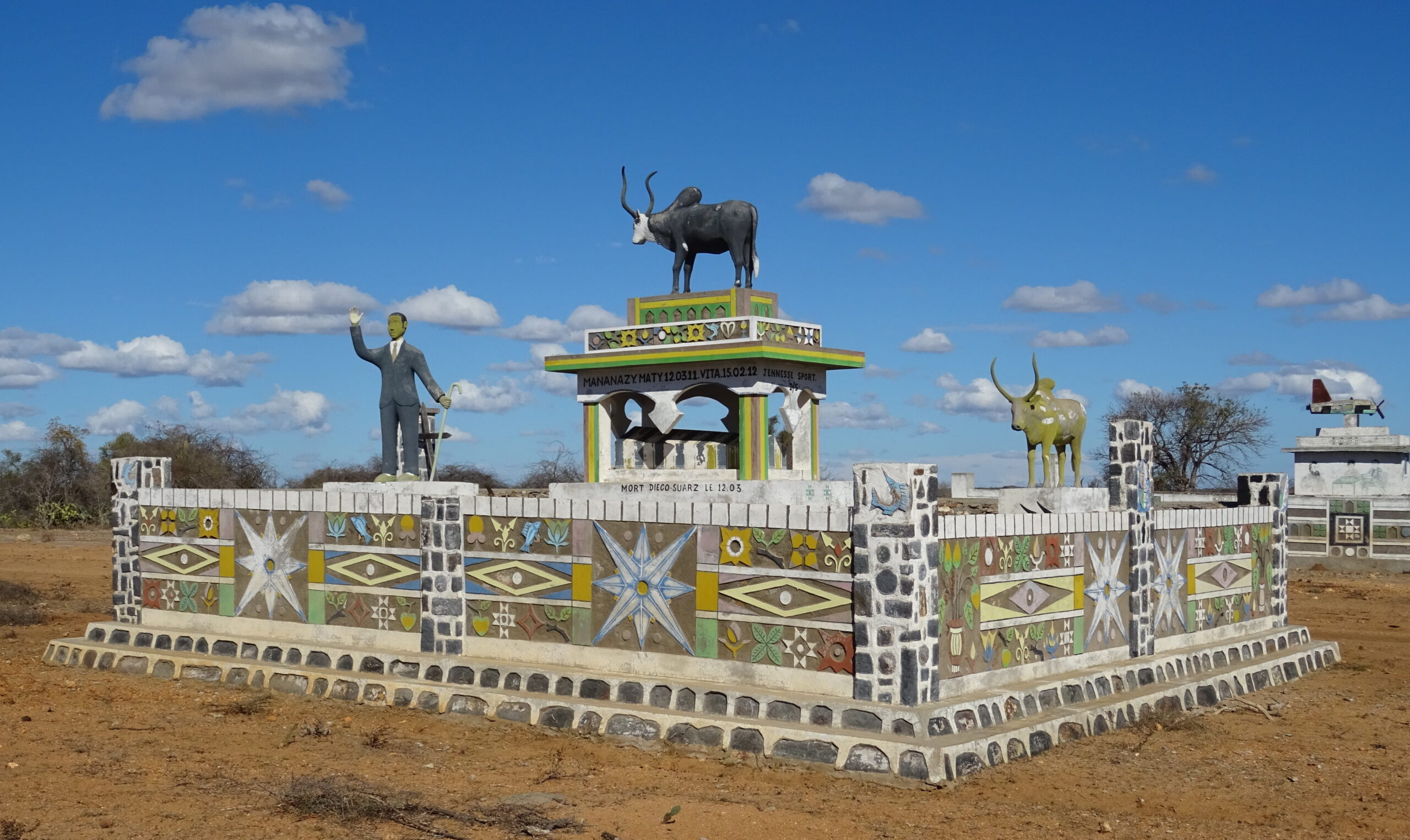
Whenever you visit the Great Island, always ask your guide about local fady. People genuinely appreciate the effort; it is a small gesture that speaks to both the living and the ancestral world.
Turning of the Dead
Famadihana & Tsaboraha
These customs might sound unfamiliar and even unsettling to outsiders, but they hold deep significance for many Malagasy communities. At the heart of these customs lies a simple but powerful belief: separation is only temporary. What begins as loss is followed, in time, by reunion. Families gather to honor their ancestors, celebrating their presence rather than mourning their absence.
These ceremonies act as a retightening of the bond between a family and those who came before them.
Highlands
Famadihana
In the central highlands, particularly among the Merina, families open ancestral tombs, carefully bring out the remains, and wrap them in fresh cloth. Despite these profound and seemingly mournful actions, the atmosphere is always joyful. Music from Hira Gasy bands fills the air with drums, trumpets, and lively singing. Relatives dance, laugh, and even speak to their ancestors. A famadihana never goes without its signature gastronomy, the Vary Be menaka: large dishes of rich, oily meat, mainly pork, are served with red rice by the hosting family.
These ceremonies usually take place during the cooler winter months. If you wish to witness one, it is best to ask in advance.
East Coast · Betsimisaraka
Tsaboraha
Among the Betsimisaraka of the east coast, the Tsaboraha follows the same principles as the famadihana. What sets it apart, however, is that it cannot be planned at will. It can only take place when an ancestor appears in a dream, often to an elder, asking to be rewrapped. From that moment, the entire family begins to prepare. They consult a traditional astrologer to choose a date, gather contributions such as rice, zebu, or local rum, and send out invitations to close relatives.
Among the Merina
Among the Betsimisaraka
A date is chosen in advance. Families prepare food, music, and fresh burial cloths (lamba).
The ceremony is only held after an ancestor appears in a dream, asking to be rewrapped. The family then prepares, sets a date with a traditional astrologer, and gathers contributions.
Relatives come together at the ancestral tomb. Musicians play Hira Gasy, setting a festive tone.
Relatives arrive and spend time together, often near the cemetery, sharing food, music, and stories.
The tomb is opened and the remains are brought out and rewrapped in new cloth. Families dance, sing, and celebrate alongside their ancestors.
The tomb is opened and the remains are brought out and rewrapped. Ritual speeches are given, and sacrifices (such as zebu) may take place.
The ancestors are returned to the tomb, which is sealed again. The celebration continues with shared meals and time together.
The ancestors are returned to their tomb. The celebration continues in the village, reminding all that the ancestors never truly leave
At their core, both traditions revolve around family, respect, and staying connected to the razana (ancestors) across generations.
Traditional Marriage
Vodiondry — The Wedding Gift
The Vodiondry is the gift offered by the groom’s family to the bride’s family. The term literally means “the rump of a sheep,” which was once considered the finest cut to present as an offering.
Today, it symbolizes gratitude and a pledge to look after the bride in the years ahead.
Traditionally, this exchange is arranged through family intermediaries, who also formally ask for the bride’s hand. A ceremonial Vodiondry begins with a series of preparatory rites, followed by the Kabary, a series of formal speeches that plays a central role in the proceedings. The mpikabary, the designated speaker, acts as the spokesperson for the family and initiates what amounts to a negotiation over the Vodiondry itself. During the Kabary, the bride’s family receives the gifts, which are far from merely symbolic; they are expected to carry clear material value and reflect the respect accorded to the bride’s family.
This ceremony is sometimes perceived as more important than the marriage itself. Some couples choose to both perform the Vodiondry and have a Christian wedding. Both the bride and groom wear traditional Merina silk garments (lamba landy), typically in warm ivories and gentle browns reflective of the silk’s natural origin. A key moment during a Vodiondry is the tying of a rope, symbolizing the union of the couple.
In rural areas, particularly in the Highlands, these customs remain strict, and failing to respect them can cast a shadow over the marriage. In cities, however, things tend to be more flexible. Regardless of setting, the Vodiondry may today take different forms, whether livestock such as zebu or cattle, money, or valuable goods, but its meaning remains the same: a gesture of respect, responsibility, and alliance between two families.